
Save up to 70% on Pro V1 and premium golf balls. Recycled vs refurbished explained, grading facts, and how to pick the right grade for your course.
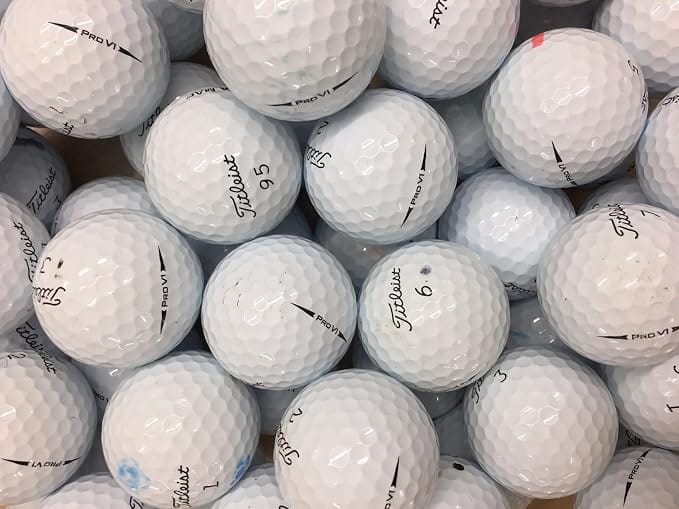
A dozen new Titleist Pro V1 golf balls costs somewhere between €50 and €65 in most Irish golf shops. The same ball, played once or twice and recovered from a course or lake, can cost half that or less. Same core, same cover, same performance on the fairway. The only thing that’s changed is a few holes of wear on the outside.
This guide covers what “used,” “recycled,” and “refurbished” actually mean, how grading works, whether condition affects how the ball plays, and how to pick the right grade for your game. No vague reassurances, just the detail you need to buy with confidence.
What Do “Used,” “Recycled,” and “Refurbished” Actually Mean?
These three terms get used interchangeably online, and that’s where a lot of confusion starts. They’re not the same product.
Recycled (Lake) Balls
Recycled balls, sometimes called lake balls, are recovered from courses and water hazards, then cleaned and sorted by condition. Nothing about the outer coating is altered. What you see is the ball as it came off the course, graded honestly against a set standard.
Refurbished Balls
Refurbished balls go a step further. After cleaning, the original coating is stripped, the ball is repainted, and the logo is re-stamped. It’s a cosmetic reset rather than a repair. The core and cover construction underneath are untouched, which is why performance stays intact even though the surface looks close to new.
Used or Pre-Owned Balls
“Used” is the broadest term and usually just means sold as-is, with the price and description tied directly to the grade. No repainting, no extra processing.
Knowing which of the three you’re buying tells you exactly what you’re getting before the box arrives.
The Grading Scale, Explained Properly
Every reputable seller grades stock against a version of the same industry scale. The names vary slightly, but the tiers don’t.
| Grade | Also Known As | Cosmetic Condition | Performance Impact | Best For |
|---|---|---|---|---|
| AAAAA | Mint / Pearl | Looks unhit, no visible marks | None | Competition, low handicap |
| AAAA | Grade A / Near Mint | Light shading, minor scuffs | None | Regular play, mid handicap |
| AAA | Grade B / Good | Moderate blemishes, some discolouration | None | Casual rounds, practice |
| Practice | X-Out / Range | Visible wear, cosmetic flaws | None to minimal | Driving range, water carries |
Balls with actual structural damage, such as cuts, cracks, or clear-coat bubbling, don’t make it into any sellable grade. They’re filtered out before a ball ever reaches a grading category, so what you’re choosing between at each tier is purely cosmetic.
Does Condition Actually Affect Performance?
This is the question that stops most first-time buyers from clicking purchase, so it deserves a straight answer: no, not within any of the grades sold as playable.
There’s a real difference between cosmetic wear and structural damage. A scuff, a faded logo, or slight discolouration changes how a ball looks. It does nothing to the dimple pattern, the core compression, or the cover material that actually determine flight, spin, and distance. Structural damage is different.
A cut through the cover or a cracked core will affect flight, and that’s precisely why those balls never get graded for sale in the first place. If it’s on a graded list, from Pearl down to practice quality, it flies the way it was designed to.
A Grade B ball with visible shading off the tee will still find the fairway exactly where a Mint one would. The only thing you’re trading for the lower price is how the ball looks in your hand, not how it performs in the air.
Why Buy Used, Recycled, or Refurbished Instead of New
Four reasons come up again and again with Irish golfers, and they stack.
Cost
The price gap is the obvious one. A dozen new premium balls running €50 to €65 can be replaced with the same tier of used or refurbished stock for a fraction of that spend. Over a season of regular play, where balls get lost to rough, gorse, and water on links courses, that difference adds up fast.
Environmental Impact
A golf ball takes an estimated 100 to 1,000 years to break down, shedding microplastics and zinc compounds into soil and water as it degrades. Studies around coastal courses have recovered tens of thousands of balls from a handful of sites alone.
Every ball recovered, cleaned, and put back into play is one that doesn’t sit in a hazard leaching plastic for the next century. Buying recycled stock isn’t a marketing angle here, it’s a direct, measurable reduction in golf’s plastic footprint.
Practical Fit for Your Game
Higher handicap and newer golfers lose more balls per round than low handicappers do. Paying premium prices for balls that end up in a hedge or a lake after four holes doesn’t make sense. Grade B and practice-tier balls solve that exact problem without dropping quality for players who don’t need Mint-level cosmetics.
Access to Premium Brands
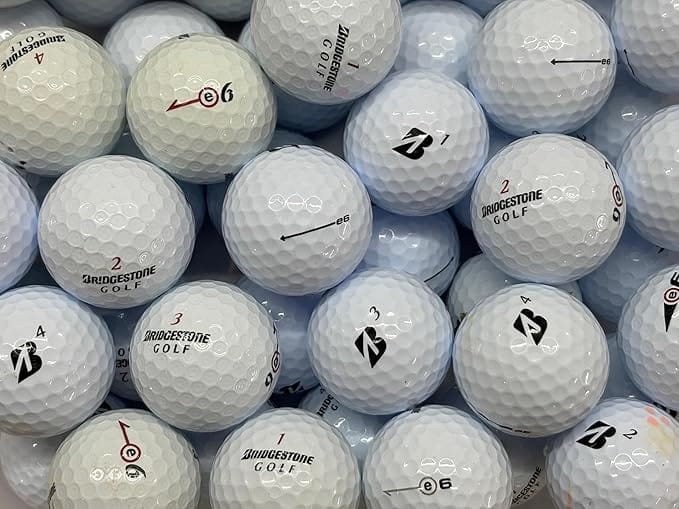
Buying used opens up tour-level balls, including Pro V1, Chrome Soft, and similar tiers, at prices that would otherwise put them out of reach for casual play. You’re not settling for a lesser brand at a lower price. You’re getting the same brand at a lower grade of cosmetic wear.
How to Choose the Right Grade for Your Game
Grade choice should follow how and where you play, not habit.
- Links courses with heavy rough, gorse, or water, common across Ireland’s coastal courses, favour Grade B or practice-tier balls. You’ll lose a share of them regardless of condition, so there’s little reason to lose a Mint ball.
- Parkland courses with more forgiving fairways, where ball loss is lower, make Grade A or AAAA a sensible middle ground between cost and appearance.
- Competition or club play where presentation matters calls for Mint or Pearl grade, since these are visually indistinguishable from new.
- Practice sessions and driving ranges are the natural home for the lowest grades, where cosmetic condition is irrelevant and cost per ball matters most.
Matching grade to context means you’re never overpaying for cosmetics you won’t notice mid-round, and never underbuying for a setting where presentation counts.
What to Check Before You Buy
A few checks separate a good purchase from a disappointing one.
- Grade transparency. The listing should state the grade clearly against a recognised scale, not just “good condition.”
- Recycled vs refurbished. Know whether you’re getting the ball’s original coating or a repainted one. Neither is better outright, but they should be priced and described differently.
- Model and year consistency. A dozen made up of mixed models or several years’ production will play inconsistently, even at the same grade.
- Return policy. A seller confident in their grading will stand behind it with a straightforward returns process.
Sellers who are upfront about all four of these are the ones worth trusting with a repeat order.
Frequently Asked Questions
Are refurbished golf balls legal for competition play?
Yes, provided the ball model itself is on the R&A/USGA conforming list. Refurbishing changes the coating, not the underlying construction, so a conforming model stays conforming after refurbishment.
How long do used golf balls last before performance drops?
A ball’s core and cover don’t degrade meaningfully in storage. Performance stays consistent from the day it’s graded until the day it’s lost or cut, regardless of how long it sits in a box beforehand.
Will a lower grade affect my scoring?
No. Grade reflects cosmetic wear only, once structurally damaged balls have been filtered out. A Grade B ball flies, spins, and rolls the same as a Mint one of the same model.
What’s the real difference between recycled and refurbished?
Recycled balls keep their original coating as recovered. Refurbished balls are stripped and repainted for a fresher look. Both play the same; refurbished simply looks closer to new.
Can I get premium tour-level balls in used condition?
Yes. Pro V1, Chrome Soft, and similar tour-tier models are widely available across every grade, from Mint down to practice quality.
Is buying used or recycled actually better for the environment?
Every ball recovered and resold is one kept out of landfill or waterways, where it would otherwise take up to a millennium to break down while releasing microplastics. Buying recycled stock is a direct, small-scale way to cut into that.