Categories
Electric Trolleys

Motocaddy M5 GPS Electric Trolley Review

Explained

Motocaddy M5 GPS Electric Trolley Review

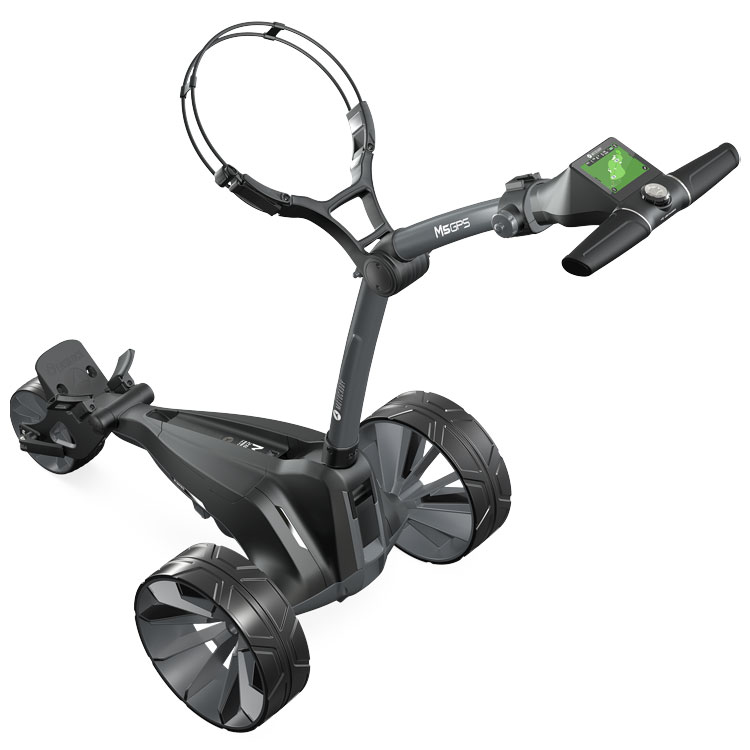
The M5 GPS was the world's first electric trolley with a fully integrated touchscreen GPS built into the handle, and it went on to win Golf Monthly's Best Electric Trolley award. Years on, updated versions keep the same core idea: yardages, course maps and trolley controls in one screen, with no separate watch or rangefinder needed.

That convenience comes with real trade-offs worth knowing before you commit to a trolley-integrated GPS rather than a standalone device, and reviewers have been consistent about what those are.

In this article
  • The original touchscreen-GPS electric trolley, later named Golf Monthly's Best Electric Trolley of 2022
  • 3.5-inch touchscreen shows 40,000+ preloaded courses with front/middle/back yardages and a moveable pin position pointer
  • GPS functionality is tied entirely to the trolley, so there are no yardages if the trolley itself can't be used that day
  • A separate DHC version exists specifically for downhill speed control, so check which one you're actually buying
Before You Buy

The Short Version

  • The integrated 3.5-inch touchscreen GPS is genuinely unique in the category and reviewers consistently rate it as the standout feature.
  • Automatic Distance Control lets the trolley travel ahead of you on its own toward the next tee or up the fairway.
  • Because the GPS lives on the trolley, you lose it entirely on any day you can’t use the trolley, and screen damage means losing GPS along with the display.
  • The standard M5 GPS doesn’t include Downhill Control. That’s the separate, pricier DHC version, worth checking before you buy if you play hilly courses.
8.7
10
GPS & Technology 9.5
Build Quality 9.0
Performance 8.5
Ease of Use 8.0
Value for Money 7.0

Motocaddy M5 GPS Electric Trolley

18-hole lithium battery

Motocaddy M5 GPS Electric Golf Trolley 18 Hole Lithium Battery

€1,164.61
in stock
Clubhousegolf.co.uk

How it performs

The 3.5-inch touchscreen is the reason this trolley exists, and reviewers across several generations of the M5 GPS agree it delivers on the concept. It’s bright and readable in a range of weather, works with a glove on, and shows front, middle and back yardages alongside hazard distances and a moveable pin position pointer that’s genuinely unusual for a trolley-mounted display. The GPS comes preloaded with over 40,000 courses, so there’s no separate app subscription required to get yardages on most courses out of the box.

Automatic Distance Control is the other headline feature reviewers consistently call out. Set it going and the trolley will travel ahead of you toward the next tee or down the fairway on its own, a genuinely practical touch once you get used to trusting it. The 28.8V drive system and 230W motor are described as whisper-quiet, with nine speed settings and a battery that charges without needing to be removed from the trolley.

The honest limitation, flagged consistently across reviews old and new, is that the GPS lives entirely on the trolley. If you play a course that restricts trolleys on a given day, or if the touchscreen gets damaged, you lose your yardages along with it, unlike a separate watch or rangefinder that travels with you regardless. One long-term reviewer also pointed out that golfers who don’t specifically want integrated GPS, and would be happy with a phone app or a separate device, may be paying for a feature they don’t fully need at this price point. Golf Monthly’s earlier testing also noted that some of the on-screen hazard acronyms take a little getting used to, a minor point, but a real one.

Key specs

Motocaddy M5 GPS Specifications

3.5-inch integrated touchscreen
GPS display
40,000+
Preloaded courses
Front/middle/back yardages, hazard distances, moveable pin position pointer
GPS features
28.8V, 230W motor
Drive system
9, with Automatic Distance Control
Speed settings
18-hole lithium, charges in place (Extended battery option also available)
Battery
Slimfold compact system, invertible wheels, auto-folding front wheel
Folding
EasiLock base
Bag attachment
Bluetooth to the free Motocaddy GPS app for smartphone notifications
Connectivity
M5 GPS DHC: adds Downhill Control for sloped courses, at a higher price
Related model
Golf Monthly Best Electric Trolley of 2022
Award
Best for
Golfers who want yardages and trolley control in one place without a separate watch or rangefinder Players who value a compact, premium-feeling fold and don't mind paying for it
Not for
Golfers who regularly play courses with trolley restrictions and want yardages independent of the trolley Anyone specifically wanting downhill speed control, better served by the DHC version instead Budget-conscious buyers who don't need integrated GPS at all
Pros
  • Genuinely unique integrated touchscreen GPS with a moveable pin pointer, unlike anything else in the category
  • Automatic Distance Control is a real practical convenience once you’re used to it
  • Excellent build quality and a compact, well-engineered folding system
  • Whisper-quiet 230W motor with nine speed settings
  • Award-winning reputation, backed by consistent praise across several review generations
Cons
  • GPS functionality is entirely tied to the trolley, so there are no yardages on days you can’t use it, and none if the screen is damaged
  • The standard M5 GPS doesn’t include Downhill Control; that’s the separate, pricier DHC version
  • Doesn’t offer 3D course maps, slope-adjusted distances or green-undulation detail that some rival GPS systems include
  • Premium price that one long-term reviewer felt may not suit golfers who don’t specifically want GPS built into the trolley

Where it sits in Motocaddy's range

The M5 GPS is Motocaddy's flagship GPS trolley, but it isn't the only GPS option in the lineup, and the step up or down changes what you're actually getting.

  • M3 GPS: a more affordable Motocaddy GPS trolley, without the M5’s full touchscreen feature set.
  • M5 GPS: covered in this review. The integrated touchscreen flagship, standard downhill handling.
  • M5 GPS DHC: adds Downhill Control specifically for sloped courses, at a higher price.
  • M7 GPS Remote: a step further up, with remote control functionality on top of the GPS.
  • M-Tech: Motocaddy’s top-tier trolley, at the highest price point in the range.

If the integrated screen is the main draw but the full M5 price is more than you want to spend, the M3 GPS is the obvious place to look first. Deciding between electric and push, or comparing brands? Our electric trolley comparison weighs Motocaddy against PowaKaddy and the rest.

Want to Spend Less? The M3 GPS Is Worth a Look

A more affordable Motocaddy GPS trolley

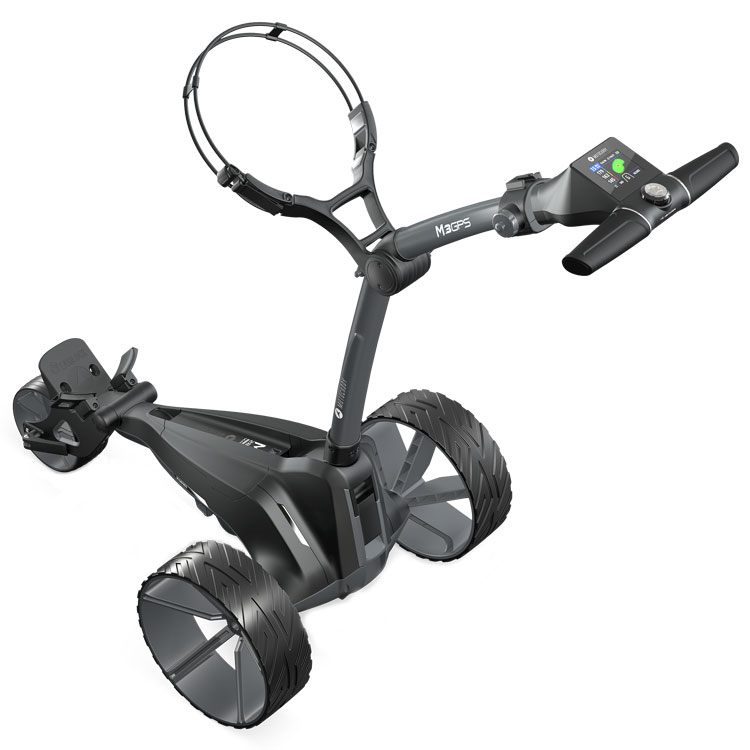
If the M5’s price is more than you want to spend, Motocaddy’s own M3 GPS costs meaningfully less while still bringing GPS into the trolley. You give up the M5’s full touchscreen feature set and moveable pin pointer, but you keep Motocaddy’s build quality and reliability at a lower entry point into GPS-integrated electric trolleys.
Motocaddy M3 GPS Electric Golf Trolley Charcoal 18 Hole Lithium Battery (Pre Order)

€849.85
in stock
Clubhousegolf.co.uk
Methodology

How We Compiled This Review

We haven’t pushed this trolley around a course ourselves, so rather than fake a hands-on account, we built this review from independent testing published across the golf media, checked against Motocaddy’s own published specifications.

  • Cross-generation testing

    Compared reviews across several generations of the M5 GPS, including current-model testing, rather than relying on a single review from one launch cycle.

  • Cross-checked expert reviews

    Read and cross-checked reviews from Golf Monthly, Golfalot, GolfMagic and Golf Guy Reviews.

  • Checked the award context

    Verified the Golf Monthly Best Electric Trolley of 2022 award directly rather than repeating the brand’s own press release uncritically.

  • Verified against Motocaddy specs

    Checked every technical spec against Motocaddy’s official product documentation.

Where a long-term reviewer raised a genuine value concern, namely whether integrated GPS is worth the premium for every golfer, we’ve included that directly rather than only repeating the positive coverage.

What to look for

What to Check Before You Buy

01
Decide if you want DHC

If you regularly play hilly courses, check whether you need the separate DHC version for downhill speed control before assuming the standard M5 GPS includes it.

02
Think about trolley-restricted days

Since the GPS lives on the trolley, consider whether you need a backup yardage method for days you’re carrying or pushing instead.

03
Confirm you actually want integrated GPS

If you already use a phone app or GPS watch happily, weigh whether the M5’s premium over a non-GPS electric trolley is worth it for your game.

04
Check battery option needs

The standard battery covers 18 holes; an Extended lithium battery version is available if you want extra range.

Frequently Asked Questions

Frequently Asked Questions

Is the Motocaddy M5 GPS worth the money?

If integrated GPS with no separate watch or rangefinder is genuinely useful to you, most reviewers say yes. If you’re happy with a phone app or already own a GPS watch, the premium over a non-GPS electric trolley may not be worth it.

Does the M5 GPS have Downhill Control?

No, the standard M5 GPS doesn’t include Downhill Control. That’s a separate model, the M5 GPS DHC, at a higher price.

What happens to the GPS if I can't use the trolley?

You lose access to the yardages, since the GPS is built into the trolley rather than a separate device. This is worth considering if you regularly play courses with trolley restrictions.

How many courses are preloaded?

Over 40,000 courses come preloaded, so most golfers won’t need to add courses manually before playing.

What's the difference between the M5 GPS and M3 GPS?

The M3 GPS is Motocaddy’s more affordable GPS trolley, without the M5’s full touchscreen feature set and moveable pin pointer.

6+ Independent publications referenced
40,000+ Preloaded courses
Golf Monthly Best Electric Trolley 2022
Independently reviewed
Ordering from Clubhouse Golf (UK) to Ireland

No surprise charges at the door: VAT and import duty are included in the price and prepaid. Delivery is €7, free over €120, in 2–4 working days.

Motocaddy M5 GPS Electric Golf Trolley 18 Hole Lithium Battery
Clubhousegolf.co.uk
€1,164.61
Motocaddy M5 GPS Electric Golf Trolley 18 Hole Lithium Battery
Motocaddy M5 GPS Electric Trolley

The M5 GPS remains one of the most genuinely innovative electric trolleys available, and the touchscreen GPS is exactly as useful as it sounds once you’ve played a few rounds with it. It isn’t for everyone. Golfers happy with a phone app or a separate watch are paying for a feature they may not need, and the GPS being tied to the trolley is a real limitation on restricted days. But for golfers who want one device doing everything, this remains close to the best in the category.

Check current price
Categories
Electric Trolleys Trolley Reviews

PowaKaddy FX1 Electric Trolley Review

Explained

PowaKaddy FX1 Electric Trolley Review

The FX1 is PowaKaddy's entry point into electric trolleys, built to prove that cutting the touchscreen and GPS mapping from the brand's pricier models doesn't mean cutting the build quality that comes with them.

It shares its PowaFrame chassis with the more expensive FX3 and FX5, which multiple reviewers single out as the reason it doesn’t feel like a budget trolley wearing an entry-level badge. The trade-off is deliberate: no screen, no follow-me tech, just a trolley that folds fast, runs quiet and gets out of your way.

In this article
  • PowaKaddy's cheapest current electric trolley, built on the same PowaFrame chassis as the pricier FX3 and FX5
  • 1-Click Fold folds 20% smaller than the previous generation, with near-universal praise for how easy it is to use
  • Deliberately strips out the screen and GPS mapping found on pricier PowaKaddy models
  • Widely rated as one of the best-value electric trolleys currently on the market
Before You Buy

The Short Version

  • Build quality doesn’t feel entry-level because it isn’t. The FX1 uses the same PowaFrame chassis as PowaKaddy’s more expensive FX3 and FX5 trolleys.
  • Folding and setup are consistently rated among the easiest of any electric trolley reviewers have tested, thanks to the Plug ‘n’ Play battery and 1-Click Fold frame.
  • There’s no digital screen or GPS, a deliberate simplicity that suits golfers who already use a phone or watch for yardages, less so if you wanted that built in.
  • PowaKaddy backs it with an industry-leading five-year pro rata battery warranty.
8.7
10
Build Quality 9.0
Ease of Use 9.5
Performance 8.5
Features 7.5
Value for Money 9.0

PowaKaddy FX1 Electric Golf Trolley

18-hole lithium battery

PowaKaddy FX1 Electric Golf Trolley 18 Hole Lithium Battery

€581.72
in stock
Clubhousegolf.co.uk

How it performs

The standout point every reviewer makes, independently of each other, is that the FX1 doesn’t feel like a budget trolley. PowaKaddy built it on the same PowaFrame chassis used in the pricier FX3 and FX5, and testers who’ve handled the whole range say the FX1 looks and handles like the more expensive units rather than a stripped-down approximation of them. That matters more for a trolley than almost any other piece of golf kit, since a flimsy frame or a wobbly fold undermines the whole point of buying electric in the first place.

Setup and folding get singled out as a genuine strength. The Plug ‘n’ Play 30V lithium battery drops straight into its holder with no wires to connect, and the 1-Click Fold frame collapses in two clicks into a shape 20% smaller than the previous generation. Multiple reviewers specifically call this out as one of the easiest trolleys they’ve used to put up and down, which matters on a cold, muddy morning far more than any spec sheet number does.

The motor itself, a 30V 230W unit, is consistently described as quiet and capable across a range of terrain, with nine speed settings and a pause/resume function that picks up at the same speed you stopped. The trade-off for all of this is the missing screen: there’s no digital display, no GPS mapping, no follow-me functionality. Reviewers who wanted those features on other PowaKaddy models are generally fine with their absence here, since the FX1 is explicitly positioned as the simple option, and a USB-C charging port lets you top up your phone or a separate GPS device on the course instead of building it into the trolley itself.

Key specs

PowaKaddy FX1 Specifications

30V, 230W
Motor
18-hole lithium, Plug 'n' Play system (Extended lithium option also available)
Battery
PowaFrame chassis, shared with the FX3 and FX5
Frame
1-Click Fold, folds 20% smaller than the previous generation
Folding
MAG-LOK system, compatible with recent PowaKaddy bags
Bag attachment
9, with pause/resume function
Speed settings
USB-C port for phone or GPS device
Charging
Height-adjustable, soft-touch, integrated scorecard and pencil holder
Handle
None, deliberately omitted to keep the trolley simple and the price down
Screen / GPS
5-year pro rata
Battery warranty
Best for
Golfers who want PowaKaddy's build quality without paying for a screen they won't use Anyone who already carries a phone or GPS watch for yardages Golfers upgrading from a push trolley or an older, less reliable electric one
Not for
Golfers who specifically want built-in GPS mapping or follow-me technology on the trolley itself, better served by the FX5 or CT range instead
Pros
  • Shares its chassis with PowaKaddy’s more expensive trolleys, so build quality doesn’t feel entry-level
  • Genuinely one of the easiest trolleys to fold and set up that reviewers have tested
  • Quiet, capable 30V motor with nine speed settings
  • MAG-LOK bag attachment and a USB-C charging port are practical, useful touches
  • Industry-leading 5-year pro rata battery warranty
Cons
  • No digital screen, GPS mapping or follow-me technology, a deliberate omission rather than a flaw, but worth knowing if you want it
  • Not the smallest trolley on the market when folded, according to at least one tester, even if it’s still compact enough for most boots
  • PowaKaddy’s own customer service and warranty experience gets mixed reports in general owner reviews, separate from the FX1’s own performance

Where it sits in PowaKaddy's range

The FX1 is the entry point into PowaKaddy's current electric lineup, and it's worth knowing what the step up actually buys you before you decide the simplicity suits you.

  • FX1: covered in this review. The simplest, cheapest electric trolley PowaKaddy currently sells, sharing its chassis with the models above it.
  • FX3: adds a simple digital display and speed controller on top of the same core FX platform.
  • FX5 / FX5 EBS: PowaKaddy’s higher-spec FX model, with more advanced electronic features.
  • CT6: a step further up again, with a full colour touchscreen and more premium positioning.

If you’re tempted by a screen mainly for yardages, it’s worth checking whether your phone or a GPS watch already covers that before paying more for a trolley that duplicates it. Weighing electric against a push trolley, or comparing brands? Our trolley buying guide covers Motocaddy, CaddyTek and the rest alongside PowaKaddy.

Methodology

How We Compiled This Review

We haven’t pushed this trolley around a course ourselves, so rather than fake a hands-on account, we built this review from independent testing published across the golf media, checked against PowaKaddy’s own published specifications.

  • Cross-checked expert reviews

    Read and cross-checked reviews from Golf Monthly, Golfalot, National Club Golfer and The Golf Shop Online.

  • Compared it against PowaKaddy's own range

    Checked how the FX1 is positioned relative to the FX3, FX5 and CT6 to understand what the simplicity actually trades away.

  • Checked general owner feedback

    Looked at broader PowaKaddy customer review and support feedback to flag brand-level patterns separate from the FX1’s own on-course performance.

  • Verified against PowaKaddy specs

    Checked every technical spec against PowaKaddy’s official product documentation.

General PowaKaddy customer service feedback is mixed in places. We’ve flagged that as a brand-level consideration rather than folding it into the FX1’s own performance rating.

What to look for

What to Check Before You Buy

01
Decide if you actually need a screen

If you already use a phone app or GPS watch for yardages, the FX1’s lack of a built-in display probably won’t bother you at all.

02
Check your typical round length

The standard battery covers 18 holes. If you regularly play more, or want a safety margin, the Extended lithium battery version is available.

03
Confirm bag compatibility

MAG-LOK works best with recent PowaKaddy bags. Check your own bag will sit securely before assuming full compatibility.

04
Register the warranty promptly

The 5-year pro rata battery warranty is a real selling point, so make sure you register the product to actually benefit from it.

Frequently Asked Questions

Frequently Asked Questions

Is the PowaKaddy FX1 a budget trolley?

It’s PowaKaddy’s cheapest current electric trolley, but it shares its PowaFrame chassis with the more expensive FX3 and FX5, so build quality is closer to the premium models than the price suggests.

Does the FX1 have GPS or a screen?

No. It’s deliberately stripped back, with no digital display or GPS mapping. A USB-C port lets you charge a separate phone or GPS device instead.

How long does the battery last?

The standard battery covers 18 holes. An Extended lithium battery version is also available for golfers who want extra range.

What's the difference between the FX1 and FX3?

The FX3 adds a simple digital display and speed controller on top of the same core FX platform. The FX5 and CT6 add further electronic features above that.

What warranty does the FX1 come with?

PowaKaddy backs the battery with a 5-year pro rata warranty, which several reviewers note as industry-leading for this price point.

5+ Independent publications referenced
5 years pro rata Battery warranty
On-course tested
Independently reviewed
Ordering from Clubhouse Golf (UK) to Ireland

No surprise charges at the door: VAT and import duty are included in the price and prepaid. Delivery is €7, free over €120, in 2–4 working days.

PowaKaddy FX1 Electric Golf Trolley 18 Hole Lithium Battery
Clubhousegolf.co.uk
€581.72
PowaKaddy FX1 Electric Golf Trolley 18 Hole Lithium Battery
PowaKaddy FX1 Electric Trolley

The FX1 does exactly what an entry-level trolley should do without feeling like a compromise: real PowaKaddy build quality, an easy fold, a quiet motor, and a genuinely strong warranty, all without the price tag of a screen most golfers can live without. If you already get your yardages elsewhere, this is one of the best-value electric trolleys currently available.

Check current price
Categories
Electric Trolleys

Electric Golf Trolley Guide: How They Work and What Matters Most

Decision moment

Stop letting spec sheets decide—match trolley features to what the course actually demands.

Standing on the 12th tee with a half‑charged battery and a steep slope ahead clarifies what matters. Marketing highlights motor watts and bells‑and‑whistles; battery range, slope capability, weight and wheel traction are the practical determinants of reliability and convenience on most courses.

Quick numbers
  • Battery: expect 18–36 holes per charge depending on voltage and capacity.
  • Slope: motors typically manage 15–25% gradients; check hill‑start torque.
  • Weight: under 15 kg eases handling; heavier trolleys trade portability for stability.
Core components

Main subsystems and what they control

An electric golf trolley’s performance and longevity come from a handful of interacting subsystems. Reading a spec sheet effectively requires mapping numbers (volts, amps, Nm) to the physical parts that produce speed, hill capability, and durability.

Key subsystems and their effects

  • Drive motor and gearbox — motor torque and gearing set acceleration and hill performance; higher continuous torque and lower gear ratios improve climbs without overheating. For deeper torque detail, see the explanation of motor torque.
  • Battery pack and BMS — voltage determines available power; capacity (Ah) controls range. The BMS and discharge capability (C‑rate) dictate sustained hill performance and battery life.
  • Electronic controller — limits current, implements speed profiles and protection. A conservative controller reduces peak speed and climb power; an aggressive one allows stronger bursts but stresses the battery.
  • Chassis, wheels, tyres, and seals — weight, frame stiffness, tyre diameter and tread influence rolling resistance, traction on slopes, and mechanical durability. Corrosion-resistant materials and IP-rated electronics extend service life.

Evaluate specs by asking which subsystem a listed number actually describes, then judge its practical impact on slopes and longevity.

Practical takeaway

Match torque and controller current limits for hill performance; match battery voltage and discharge rate for sustained power. Robust frame and tyres matter more than small motor power increases for real-world durability.

Power vs torque

Power versus usable torque: choosing the right trolley

Turn specs into on‑course performance

Understanding power versus usable torque

Manufacturers often quote motor power (watts) but usable performance on a slope is determined by torque at the wheel. Torque is what overcomes gravity and rolling resistance; power determines how fast the motor can sustain that torque. Gear reduction and wheel radius convert motor torque into drive torque at the wheel, so identical watt ratings can produce very different hill‑climb ability.

For guidance on selecting motor size for steep terrain, consult a focused discussion of motor power for hilly courses. For tradeoffs in motor design that affect sustained torque and reliability, see the comparison of brushless and brushed trolley motors.

Practical steps to match trolley to course conditions

  • Estimate the loaded mass: trolley + bag + accessories (typical 25–35 kg).
  • Choose the maximum slope to negotiate (expressed as % grade).
  • Calculate required tractive force: mass × g × grade (N). Multiply by wheel radius to get required wheel torque (Nm).

Example: 30 kg on a 10% slope → force ≈ 30×9.81×0.10 ≈ 29.4 N; with 0.15 m wheels torque ≈ 4.4 Nm per wheel. Allow a safety margin (×2–3) for soft turf and start‑stop.

Rule‑of‑thumb trolley selection:

  • Mostly flat: 180–250W motors suitable.
  • Rolling hills: 250–350W recommended.
  • Consistently steep or heavy loads: 350W+ or high‑torque gearbox preferred.

Also prioritise wide, low‑pressure tyres and conservative speed settings to reduce continuous torque demands and preserve battery range.

Motor choice

Brushless vs brushed motors

Key tradeoffs explained

Brushless and brushed motors deliver similar shaft power but differ sharply in efficiency, durability and ownership costs. The distinction matters most when matching trolley performance to frequency of use and course difficulty.

  • Efficiency: Brushless motors are typically 15–30% more efficient. That translates to longer range per charge and less battery stress on long rounds.
  • Heat: Brushless designs run cooler under load because there are no frictional brushes; this improves sustained hill‑climb performance and reduces thermal derating.
  • Maintenance: Brushed motors require periodic brush replacement and inspections. Brushless motors are largely maintenance‑free, often sealed.
  • Cost and repairs: Brushed units have lower upfront cost and simpler repair paths. Brushless systems cost more initially and rely on complex controllers, which can be costlier to fix.
  • Warranty implications: Manufacturers commonly offer longer warranties on brushless motors, but controller electronics may have separate terms.

Recommendation: for frequent, hilly or commercial use, brushless typically yields better lifecycle value; brushed suits infrequent users prioritizing lower purchase price.

Power fundamentals

Batteries, range math, and real‑world endurance

How chemistry, Ah and voltage determine usable energy and what reduces runtime

How chemistry and capacity translate to usable energy

Battery capacity is the product of voltage (V) and ampere‑hours (Ah). That product gives watt‑hours (Wh) — the actual energy available: 36 V × 20 Ah = 720 Wh. Divide Wh by the trolley’s average draw (watts) to estimate runtime in hours, then convert hours to distance or holes.

Different chemistries matter. Sealed lead‑acid (SLA/AGM) is heavy, lower energy density and tolerates simpler chargers but has shorter cycle life. Lithium (Li‑ion, LiFePO4) offers higher energy per kilogram, longer cycle life, and lower self‑discharge; LiFePO4 trades slightly lower energy density for better thermal stability and longevity.

Realistic factors that change endurance

  • Terrain and slope: sustained climbs can double motor draw compared with flat ground.
  • System weight: added gear or a heavier golfer increases rolling resistance roughly in proportion to mass.
  • Speed and stop‑start: higher speeds and frequent stops raise average power.
  • Tyre pressure and surface: underinflation and soft ground increase rolling losses.

For practical conversions and per‑round examples, consult the practical range estimates page.

Charging and storage practices

Charge after use; avoid deep discharge on lithium packs. Store lithium cells at about 40–60% state of charge in a cool, dry place; keep SLA/AGM fully charged during long storage to prevent sulfation. Use the manufacturer’s charger and avoid high‑temperature charging to maximize cycle life.

Charging tip: Recharge immediately after a round, remove batteries for winter storage, and keep Li‑ion cells at ~50% SOC for long‑term storage.

Handling and reliability

Control schemes, ergonomics, and failure modes

How controls feel, what can fail, and what to test at a demo

Control options and how they differ

Electric trolleys use three common control schemes: handle-mounted controls (direct buttons or throttle), programmable controllers with speed/route presets, and wireless remotes that add range and convenience. Compare functional tradeoffs when weighing automation, responsiveness, and simplicity — for a focused comparison see the tradeoffs between remote and manual systems.

Ergonomics and common failure modes

Ergonomics matters: handle height, angle, grip texture, and button placement affect comfort and precision. Readability of any display under sun and wet conditions is critical. Frequent failure modes include: wiring or connector corrosion, button/throttle wear, water ingress into the controller, battery voltage sag under load, and remote interference or latency.

Demo checklist (what to test)

  • Test immediate responsiveness to small speed and steering inputs.
  • Try hill starts and emergency stops several times.
  • Verify button feel and display legibility in bright light and rain.
  • Check real-world remote reach and robustness — consult the realistic remote distances and limits.

For a short demo checklist to bring to a shop, consult this demo buying checklist.

On‑slope safety

Active safety systems

Hill sensors, auto‑braking, park brakes and stability

Active safety systems prevent uncontrolled runs on slopes, reduce descent speed, and preserve stability on undulating courses. Four systems matter:

  • Hill sensors: detect gradient and modulate motor torque to slow descent; in a demo, place the trolley on a slope and check automatic speed reduction.
  • Auto‑braking: engages regenerative or electronic braking when motion exceeds a threshold; test by releasing the handle on a gentle incline — the trolley should stop or slow immediately.
  • Electronic park brake: mechanically locks the drive or applies holding torque; verify by engaging the park brake on an incline and confirming no roll.
  • Stability design: low center of gravity, wide wheelbase, and anti‑tip geometry resist rollovers; test with turns on a slope and a full bag load.

See the detailed explainer on hill sensors and auto-braking for technical background.

During demos, use a moderate slope and a full bag load to replicate real on‑course forces.

Myths

Common Myths About Electric Trolleys

Myth
Electric trolleys damage greens and fairways.
Fact

With wide, low‑pressure tyres and controlled torque they rarely harm turf.

Why it matters

Damage stems from wheel spin on wet slopes; avoid parking on greens. See impact research.

Myth
Heavier trolleys automatically cause more turf wear.
Fact

Contact patch and tyre design set ground pressure; flotation tyres lower wear.

Why it matters

Wide tyres and correct inflation spread load and reduce per‑area pressure.

Myth
Electric trolleys require little upkeep.
Fact

They need battery care, tyre checks, drivetrain cleaning and fastener inspection.

Why it matters

Simple routines prevent corrosion, battery degradation and motor strain after wet use.

Short maintenance checklist

Charge batteries after each round; store cool, partially charged in a dry place.
Rinse mud, avoid high‑pressure jets; lubricate pivots annually.
Check tyre pressure and tighten bolts monthly; test free‑wheel and brakes.

Buying checklist

Step‑by‑step demo checklist

  • Set performance targets

    Define typical round length, bag weight and hill severity; convert to required battery Wh and motor torque before testing. Prioritize models whose published range comfortably exceeds calculated needs.

  • Run the hill and brake tests

    On a representative slope, check climb speed, hill‑sensor response and electronic park braking under load; note any wheel slip or uncontrolled rollback.

  • Verify battery behaviour

    Measure charge time, confirm available capacity at typical load, and check battery fit/lock and replacement options; test discharge under a full‑load, mixed‑slope run.

  • Assess drive system and controls

    Compare motor type (brushless vs brushed), real‑world torque feel and remote/handle ergonomics; validate remote range and control latency during a demo round.

  • Inspect chassis, wheels and service terms

    Check tyre tread and suspension compliance, folding mechanism, corrosion protection and warranty/parts access. For value options, start with the practical picks under €700.

FAQs

Common FAQs

How much torque is enough?

Target 30–40 Nm per wheel on steep courses. More torque lowers motor load and preserves battery life.

How to estimate battery for a full round?

Use Wh math from earlier and add a 20% margin. 300–500 Wh commonly covers an 18‑hole round depending on slope and load.

What to check during a demo?

Verify hill‑brake function, remote fail‑safe, and loaded climb. Inspect battery connectors and tyre condition.

Takeaway

Practical takeaway

  • Torque and brakes first for hilly courses
  • Battery Wh and usable range for long rounds

Prioritize torque and hill‑safety systems for steep courses; prioritize battery capacity and efficient motors for long rounds. Balance weight and tyres to match turf and storage.