Categories
Golf Clothing

Under Armour Drive Pro Storm Hybrid Golf Sweater Review

Explained

Under Armour Drive Pro Storm Hybrid 1/2 Zip Golf Sweater Review

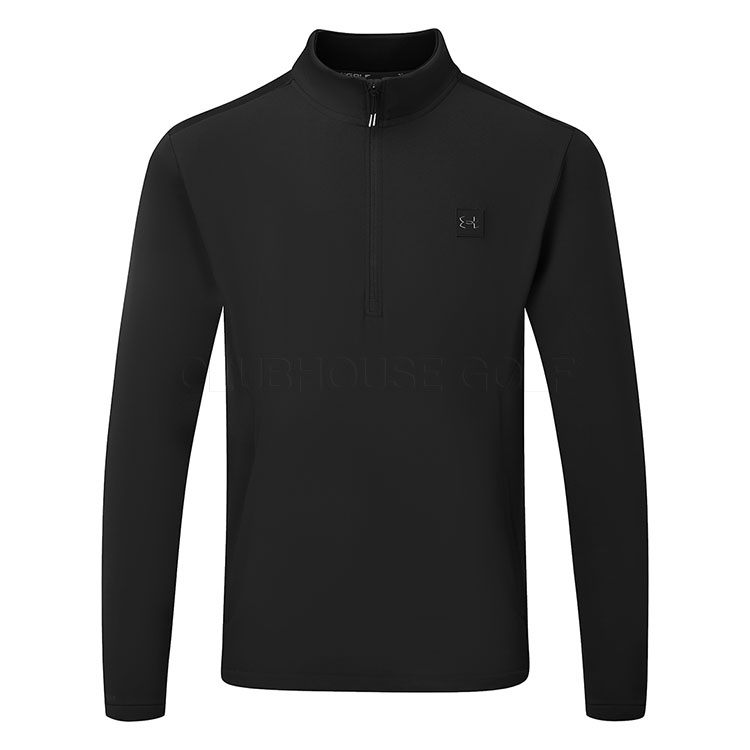
The Drive Pro Storm Hybrid is Under Armour's hybrid mid-layer for cool, changeable golf weather, combining a wind-resistant woven front panel with breathable knit fabric through the sleeves, sides and back, all built on UA's Storm water-repellent technology.

Worth being upfront on sourcing here: unlike premium branded equipment, budget-to-mid-price golf apparel like this doesn’t get the kind of hands-on testing Golf Monthly or Golfalot give to clubs and shoes. What we’ve pulled together is Under Armour’s own technical specification, consistent across every retailer that stocks it, rather than independent editorial review, and we want to be honest about that distinction.

In this article
  • Hybrid construction: wind-resistant woven fabric on the front body, breathable knit spacer fabric on the sleeves, sides and back
  • UA Storm technology is designed to repel water without sacrificing breathability, using a fluorine-free treatment
  • Worn on tour by Jordan Spieth, per the retailer's own product listing
  • Genuinely affordable within Under Armour's own range, cheaper than the newer non-Storm Drive Pro Hybrid sweater
Our Take

Drive Pro Storm Sweater Summed Up

  • This is a hybrid mid-layer, not a full waterproof. UA Storm technology repels light rain and drizzle rather than replacing a dedicated waterproof jacket.
  • The cut is described by Under Armour itself as a loose, fuller fit, worth knowing if you usually prefer a slim athletic cut.
  • We couldn’t find independent golf-media testing of this specific garment, so this review leans on manufacturer specification and consistent retailer detail rather than hands-on review.
  • It’s one of the more affordable pieces in Under Armour’s current golf mid-layer range, undercutting the newer non-Storm Drive Pro Hybrid sweater.
7.7
10
Weather Protection 8.0
Breathability 8.0
Comfort & Fit 7.5
Styling 7.5
Value for Money 8.5

Under Armour Drive Pro Storm Hybrid 1/2 Zip Sweater
Black / Metallic Silver

Under Armour Drive Pro Storm Hybrid 1/2 Zip Golf Sweater Black/Metallic Silver 1387118-001

€50.93
in stock
Clubhousegolf.co.uk

What you're actually getting

The design logic is a genuinely sensible one for golf: a durable, stretch-woven panel across the front and shoulders to block wind and shrug off light rain, paired with a softer knit spacer fabric everywhere you actually generate heat during a swing, including the sleeves, sides and back. That combination is meant to solve the usual mid-layer trade-off, where a fully wind-resistant garment traps heat and restricts movement, and a fully breathable one does nothing in a stiff breeze on the back nine.

UA Storm technology is a fluorine-free water-repellent treatment rather than a fully waterproof membrane, and it's worth being precise about that distinction. It's designed for light rain, drizzle and damp mornings, not the kind of sustained downpour you'd want a dedicated waterproof jacket for. Under Armour's own specification is consistent across every retailer listing we checked: a half-zip neck with a low-profile collar, secure zip hand pockets, a built-in tee holder on the right side, and metallic trim detailing.

On fit, Under Armour describes this as a loose, fuller cut rather than a slim athletic one, which is worth knowing if most of your wardrobe runs closer-fitting. It’s a notable enough garment that it’s been worn on tour by Jordan Spieth, according to the retailer’s own listing, a genuine detail, though obviously not the same thing as independent testing of how it performs for an average golfer’s swing and body shape.

Key specs

Under Armour Drive Pro Storm Hybrid Specifications

Hybrid: stretch-woven front body, knit spacer fabric sleeves/sides/back
Construction
UA Storm, fluorine-free water-repellent treatment
Weather technology
1/2 zip neck, low-profile collar
Closure
Secure zip hand pockets, built-in tee holder (right side)
Pockets
Woven: 87% polyester / 13% elastane; Knit: 88% polyester / 12% elastane; Lining: 100% polyester
Materials
Loose, fuller cut
Fit
UA logo, left chest; metallic trim detailing
Branding
Worn on tour by Jordan Spieth, per retailer listing
Notable wearer
Best for
Golfers wanting an affordable wind- and light-rain-resistant mid-layer for cool, changeable rounds Anyone who prefers a looser, more relaxed fit over a slim athletic cut
Not for
Golfers who need genuine waterproof protection in sustained rain, best paired with or replaced by a dedicated waterproof jacket Golfers who specifically want a slim, fitted silhouette
Pros
  • Sensible hybrid construction: wind protection where you need it, breathability where you generate heat
  • UA Storm’s water-repellent treatment covers light rain and damp mornings without needing a full waterproof layer
  • Genuinely affordable within Under Armour’s own golf mid-layer range
  • Practical features: secure zip pockets and a built-in tee holder
  • Established tour association through Jordan Spieth
Cons
  • Water repellency, not full waterproofing, so it’s not a substitute for a dedicated rain jacket in sustained rain
  • Loose, fuller cut may not suit golfers who prefer a slim, athletic fit
  • No independent golf-media testing exists for this specific garment, so real-world durability and breathability claims come from the manufacturer rather than a third party
  • Colour options on this specific version are more limited than some newer Under Armour mid-layers
Methodology

How Gary Burke Built This Review

This review leans on different sourcing than our equipment reviews, and we want to be upfront about that. Independent, hands-on testing of specific mid-priced golf mid-layers like this one is rare in golf media, so instead of pretending otherwise, we’ve built this from Under Armour’s own published specifications, consistent across every retailer that stocks it.

  • Manufacturer specifications

    Checked construction, materials and features against Under Armour’s own product documentation, cross-referenced across multiple retailers for consistency.

  • Checked for independent coverage

    Searched specifically for golf-media testing of this exact garment. We found general coverage of Under Armour’s Storm technology and reviews of other, different Under Armour apparel, but no independent hands-on review of this specific sweater.

  • Verified the notable detail

    Confirmed the Jordan Spieth tour-wear detail against the retailer’s own listing rather than repeating it without checking.

We’re flagging this openly: this review carries less independent testing weight than our reviews of golf equipment, because that testing doesn’t really exist for this specific product.

What to look for

Drive Pro Storm Sweater Buying Checklist

01
Know the difference between water-repellent and waterproof

This handles light rain and drizzle. For sustained wet weather, pair it with or choose a dedicated waterproof jacket instead.

02
Size down if you prefer a fitted look

The loose, fuller cut is a deliberate design choice. Check Under Armour’s size guide if you normally wear a slim fit.

03
Compare against the non-Storm Drive Pro Hybrid

Under Armour also sells a newer Drive Pro Hybrid sweater without Storm technology at a higher price, so make sure you’re buying the weather-resistant version if that matters to you.

04
Check colour availability for your size

Colour and size combinations vary by retailer stock, so confirm your preferred option is actually available before ordering.

Frequently Asked Questions

What Golfers Ask About the Drive Pro Storm Sweater

Is the Under Armour Drive Pro Storm Hybrid sweater waterproof?

No, it’s water-repellent rather than fully waterproof. UA Storm technology is designed for light rain and drizzle, not sustained downpours.

Does it run true to size?

Under Armour describes it as a loose, fuller cut rather than a slim athletic fit. If you prefer a closer fit, consider checking the size guide or sizing down.

What's the difference between this and the Drive Pro Hybrid without Storm?

The Storm version adds Under Armour’s water-repellent treatment. The newer non-Storm Drive Pro Hybrid sweater is a different, more expensive garment without that weather technology.

Who wears this on tour?

According to the retailer’s product listing, it’s been worn on tour by Jordan Spieth.

What is UA Storm technology?

It’s Under Armour’s fluorine-free water-repellent treatment, designed to keep water out while maintaining breathability, rather than a fully waterproof membrane.

5+ Retailer listings cross-checked
UA Storm (water-repellent) Weather technology
Manufacturer specs verified
Worn on tour
Ordering from Clubhouse Golf (UK) to Ireland

No surprise charges at the door: VAT and import duty are included in the price and prepaid. Delivery is €7, free over €120, in 2–4 working days.

Under Armour Drive Pro Storm Hybrid 1/2 Zip Golf Sweater Black/Metallic Silver 1387118-001
Clubhousegolf.co.uk
€50.93
Under Armour Drive Pro Storm Hybrid 1/2 Zip Golf Sweater Black/Metallic Silver 1387118-001
Under Armour Drive Pro Storm Hybrid 1/2 Zip Golf Sweater

This is a sensible, well-specified hybrid mid-layer at a genuinely affordable price within Under Armour’s own range, with wind resistance and light-rain protection where you need it and breathability where you generate heat. Just be clear-eyed that Storm technology means water-repellent, not waterproof, and that the loose cut is a deliberate style choice rather than a universal fit. For cool, changeable rounds, it does exactly what it’s designed to do.
Check current price
Categories
Golf Package Sets

Ben Sayers M8 Package Set Review

Explained

Ben Sayers M8 Package Set Review

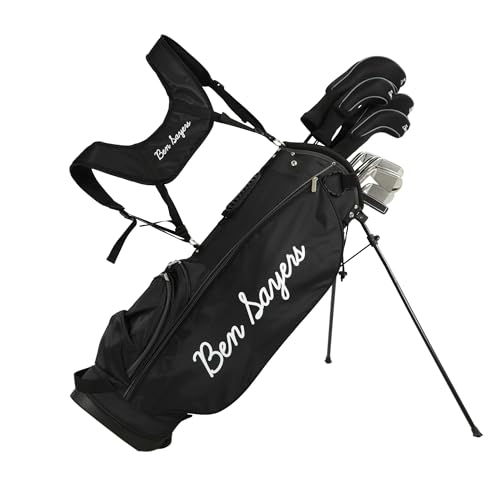
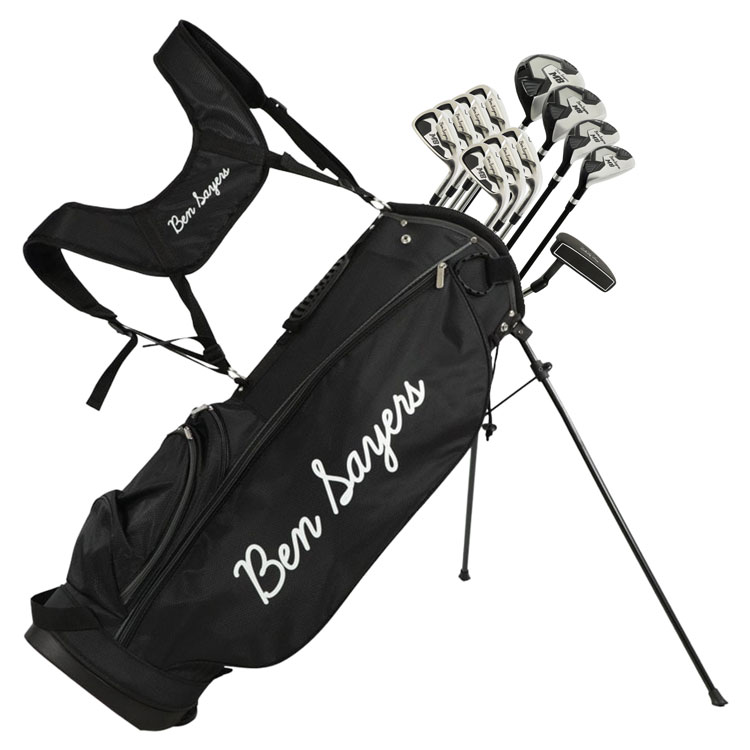
The M8 is Ben Sayers' complete beginner package set: a driver, two fairway woods, a hybrid, seven irons, a putter and a stand bag, all in one box, for less than the price of a single premium driver.

This is the 13-piece graphite and steel set with a stand bag from Clubhouse Golf. It ships to Ireland with VAT and import duty already included in the price, and delivery is free over €120 in 2 to 4 working days.

In this article
  • A complete 13-piece package: driver, 3-wood, 5-wood, hybrid, seven irons, putter and stand bag
  • Graphite-shafted woods with a choice of graphite or steel-shafted irons
  • Genuine buyer reviews are positive overall, with the putter and bag weight flagged as the weakest points
  • Standard and +1 inch length options mean the set fits a wider range of heights than most package sets
At a Glance

Ben Sayers M8: The Quick Answer

  • This is a genuinely complete beginner set, 12 clubs plus a putter and bag, at a price well below most premium single clubs.
  • Buyer reviews are consistently positive on the woods and irons, with the included putter singled out as the weakest club in the set by more than one owner.
  • At least one verified buyer review mentioned the stand bag feeling heavier than expected once loaded.
  • We couldn’t find independent golf-media testing of this specific package set, so this review leans more heavily on manufacturer specs and genuine buyer feedback than our usual reviews.
7.8
10
Value for Money 9.0
Forgiveness (Woods & Irons) 8.0
Bag & Extras 7.0
Putter Quality 6.0
Fit Range (Sizing Options) 8.5

Ben Sayers M8 13-Piece Package Set

Graphite/Steel, Stand Bag

Ben Sayers M8 13-Piece Golf Package Set Graphite/Steel Stand Bag Black/Grey

€346.40
in stock
Clubhousegolf.co.uk
Delivered to Ireland with no customs surprises

Clubhouse Golf ships from the UK. VAT and import duty are included in the price and prepaid. Delivery is €7, free over €120, in 2 to 4 working days.

Another seller: the same stand bag version (right hand, black and grey) is also listed here, usually at a higher price than Clubhouse Golf. It is worth a look if you prefer that seller’s returns process.

What you actually get

The M8 is built around the same idea most beginner package sets share: oversized, forgiving heads and lightweight shafts to help new golfers make solid contact and get the ball airborne without needing a fitted, custom-built bag of clubs. The driver is a 460cc oversized titanium matrix head at 10.5°, paired with matching 3-wood (15°) and 5-wood (20°) heads and a 23° hybrid, all on regular-flex graphite shafts to help generate swing speed. The seven irons run from 5-iron through sand wedge, available with either steel or graphite shafts depending on which version you choose, backed by a mallet putter to round out the 13 pieces.

Buyer reviews from retailers who stock the set are genuinely useful here, since independent golf-media testing of budget package sets like this is rare. The consistent theme across verified buyer reviews is that the woods and irons perform well above what the price suggests, with several new and returning golfers specifically praising the forgiveness and ease of getting the ball up in the air. The putter is the one component that comes up as a genuine weak point. More than one buyer mentioned swapping it out for an older putter they already owned, which is worth knowing before you assume the whole set is equally strong.

The stand bag is feature-rich on paper: an 8-way top divider, seven pockets including a cooler pocket and a valuables pocket, an umbrella cord, a towel carabiner and a glove holder, plus headcovers for all four woods. At least one verified buyer noted the bag feels heavier than expected once it’s loaded with clubs and accessories, which is a fair trade-off to know about if you’ll be carrying it rather than using a trolley. Weighing it against other budget and beginner brands? Our complete golf set guide covers Wilson, MacGregor and Fazer alongside Ben Sayers.

Key specs

Ben Sayers M8 Package Set Specifications

13 (driver, 3-wood, 5-wood, hybrid, 7 irons, putter, stand bag)
Total pieces
10.5°, 460cc oversized titanium matrix, graphite shaft
Driver
3-wood (15°) and 5-wood (20°), matching titanium matrix, graphite
Fairway woods
23°
Hybrid
5-iron through sand wedge (7 irons), steel or graphite shaft options
Irons
Mallet-style putter
Putter
Stand bag, 8-way top divider, 7 pockets including cooler and valuables pockets
Bag
Headcovers for all four woods, umbrella cord, towel carabiner, glove holder
Extras
Standard or +1 inch, for taller players
Length options
Regular flex throughout
Shaft flex
Best for
Complete beginners who want everything in one box without a large upfront investment Golfers returning to the game after a long break who want a reliable, complete set Taller golfers, thanks to the +1 inch option most budget sets don't offer
Not for
Golfers who already know they want a specific putter feel and should budget for a replacement putter separately Players who expect to be carrying the bag regularly and are sensitive to weight
Pros
  • A genuinely complete set at a price well below most single premium clubs
  • Oversized, forgiving heads across the woods and irons suit new golfers well by design
  • Feature-rich stand bag with a sensible pocket layout, including a cooler pocket
  • Standard and +1 inch length options cover a wider range of heights than most budget sets
  • Multiple verified buyers describe it as strong value after actually using it
Cons
  • The included putter is the most consistently criticised piece in genuine buyer reviews
  • At least one buyer found the loaded stand bag heavier than expected
  • This set hasn’t received the kind of independent golf-media testing that premium equipment gets, so confidence in performance claims is necessarily lower
  • As with any budget package set, expect to outgrow parts of it as your game and swing speed develop
Methodology

How We Researched the Ben Sayers M8

This review leans on different sourcing than most of our equipment reviews, and we want to be upfront about that. Independent, hands-on testing of budget package sets like the M8 is rare in golf media, so instead of pretending otherwise, we’ve built this from Ben Sayers’ own published specifications and genuine verified buyer reviews from retailers who sell the set.

  • Manufacturer specifications

    Checked every technical detail, including lofts, shaft options and bag features, against Ben Sayers’ own product documentation.

  • Verified buyer reviews

    Read genuine customer reviews left on retailer sites that sell the M8 set, looking specifically for repeated, specific feedback rather than generic praise.

  • Cross-checked what we could find

    Where any independent editorial coverage existed for related Ben Sayers equipment, we checked it, but were careful not to apply reviews of different, unrelated Ben Sayers products to this specific package set.

We’re flagging this openly: this review carries less independent testing weight than our reviews of premium branded equipment, because that testing doesn’t really exist for this product. What’s here is honest about that rather than manufactured to look more rigorous than it is.

What to look for

Questions to Ask Before Buying

01
Pick standard or +1 inch length

If you’re above average height, the +1 inch option is worth checking before you buy, since not every budget set offers it.

02
Choose your iron shaft carefully

Graphite suits slower swing speeds and easier launch; steel gives more control as you develop. Pick based on where you are now, not where you hope to be.

03
Budget separately for the putter if needed

If putting feel matters to you, don’t assume the included putter will suit you, since several buyers replaced it.

04
Think about how you'll transport the bag

If you’ll be carrying rather than using a trolley, the reported bag weight is worth factoring in.

Frequently Asked Questions

Ben Sayers M8 FAQ

Is the Ben Sayers M8 a good set for beginners?

Genuine buyer reviews are consistently positive, particularly on the woods and irons. It’s designed specifically for beginners and returning golfers, with forgiving, oversized club heads throughout.

Is the putter in the M8 set any good?

This is the most consistently criticised part of the set in verified buyer reviews. Some golfers replace it with a putter they already own or a separate purchase.

Does the M8 come in different lengths?

Yes, it’s available in standard length or +1 inch, which suits taller golfers better than most budget package sets that only offer one length.

Steel or graphite shafts: which should I choose?

Graphite is lighter and generally easier for beginners and slower swing speeds. Steel offers more control as your swing develops. Both are available on this set’s irons.

How many clubs are in the Ben Sayers M8 set?

13 pieces in total: driver, 3-wood, 5-wood, hybrid, seven irons (5-iron to sand wedge), a putter, and a stand bag.

13 Total pieces
Standard or +1 inch Length options
Buyer-reviewed
Manufacturer specs verified
Ben Sayers M8 13-Piece Golf Package Set Graphite/Steel Stand Bag Black/Grey
Clubhousegolf.co.uk
€346.40
Ben Sayers M8 13-Piece Golf Package Set Graphite/Steel Stand Bag Black/Grey
Ben Sayers M8 13-Piece Package Set

For the price of a single premium driver, the M8 gets a new or returning golfer a complete, genuinely forgiving set with a feature-rich bag. Buyer feedback is honest about where the corners were cut, mainly the putter, rather than uniformly glowing, which is exactly the kind of signal worth trusting. This is a sensible, low-risk way to get properly equipped without a large upfront investment, with the understanding that you may want to upgrade individual pieces as your game develops.

See it at Clubhouse Golf
Categories
Launch Monitors

Garmin Approach R10 Launch Monitor Review

Explained

Garmin Approach R10 Launch Monitor Review

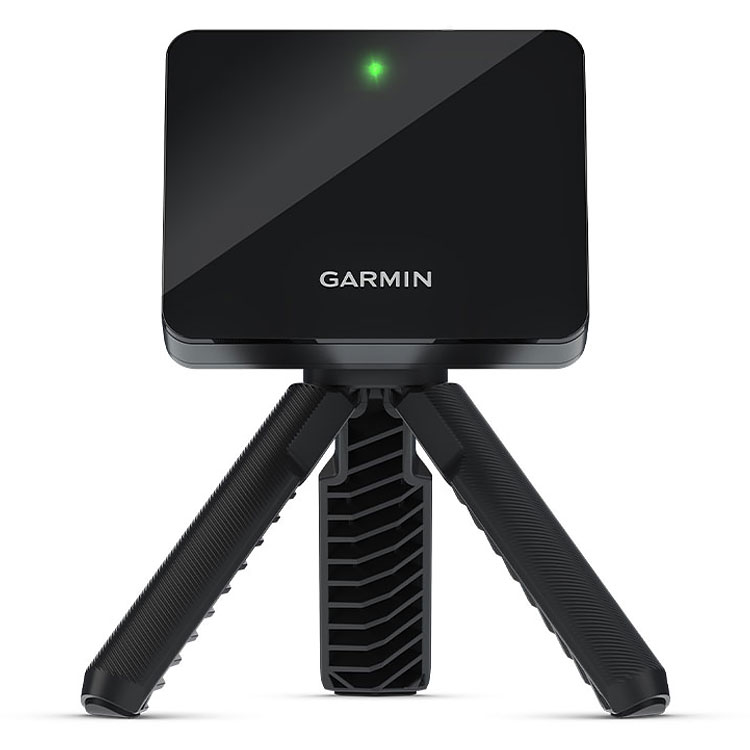
The R10 was the launch monitor that proved serious swing data didn't need a five-figure price tag, and years after release it's still the reference point most budget and mid-range launch monitors get compared against.

MyGolfSpy put it through a structured 50-hour test alongside twelve rivals and scored it 87.5 out of 100, a genuinely strong result at this price. Independent reviewers are consistent on where it shines and where it doesn’t, and the honest picture is more nuanced than “cheap Trackman” marketing suggests.

In this article
  • Scored 87.5/100 in MyGolfSpy's structured Most Wanted launch monitor testing, a strong result at this price point
  • Tracks 14+ data points including full club data, not just ball flight, which is rare below €600
  • Reviewers found it struggles specifically at outdoor driving ranges; it's at its best in a net or home studio setup
  • The full E6 Connect simulation experience needs a separate ongoing subscription beyond the free starter courses
Quick Verdict

Should You Buy the Approach R10?

  • Independent testing (MyGolfSpy) rated its accuracy competitive with far more expensive units like SkyTrak, particularly outdoors.
  • Golf Monthly specifically flagged unreliable tracking at driving ranges; it performs best hitting real balls into a net or home studio.
  • The R10 works standalone for free via the Garmin Golf app, but full E6 Connect course access and Home Tee Hero content require separate ongoing subscriptions, and the pricing structure has confused a number of owners.
  • Some data points are algorithmic (calculated after the shot) rather than fully real-time, unlike pricier radar-and-camera systems.
8.6
10
Accuracy 8.5
Data & Features 9.0
Portability 9.0
Ease of Use 8.5
Value for Money 8.5

Garmin Approach R10 Portable Launch Monitor

Radar-based launch monitor and simulator

Garmin Approach R10 Portable Golf Launch Monitor

€514.20
in stock
Clubhousegolf.co.uk

Performance: What Reviewers Found

MyGolfSpy’s Most Wanted testing put the R10 up against twelve other launch monitors in a structured 50-hour test covering accuracy, ease of use, portability and features. It came out with a score of 87.5 out of 100, a genuinely strong result for a unit that costs a fraction of the professional-grade systems it was measured against. Other independent testers found its outdoor accuracy comparable to launch monitors costing three to four times as much, particularly for carry distance and ball speed, where the radar technology is playing to its strengths.

Where reviews consistently diverge is at the driving range. Golf Monthly specifically tested the R10 in that setting and found it struggled with reliable tracking, a real limitation worth taking seriously rather than dismissing as one bad session. The consistent recommendation across reviews is that the R10 is at its best hitting real golf balls into a net or in a home studio setup, not on a range mat, where surface and mat characteristics seem to interfere with the radar tracking in ways a net setup avoids.

Data depth is a genuine strength. The R10 tracks 14 metrics including club head speed, face angle, path angle, angle of attack, spin axis, spin rate and smash factor, alongside the ball-flight numbers every launch monitor covers. That’s a meaningful step up from cheaper alternatives that only track ball data, though it’s worth knowing that some of these metrics, particularly the club data, are calculated algorithmically after the shot rather than measured in true real time the way a Trackman or GC Quad would. For the price, reviewers consistently judge that trade-off worth it. Thinking about a full home setup rather than just the unit? Our golf simulator guide covers nets, enclosures and rival launch monitors like SkyTrak and Rapsodo.

Key specs

Garmin Approach R10 Specifications

Doppler radar
Tracking technology
14+, including club head speed, face angle, path angle, angle of attack, spin axis, spin rate, smash factor, carry and total distance
Data metrics
Up to 10 hours, internal rechargeable lithium-ion
Battery life
IPX7
Water rating
88.5 x 70.25 x 25mm (without tripod)
Dimensions
~148g (5.22oz), ~221g (7.79oz) with tripod
Weight
Garmin Golf app, iOS and Android
Connectivity
E6 Connect compatible; a handful of free courses included, more require a separate TruGolf subscription
Simulation software
R10 unit, tripod stand, phone mount, carry case, charging cable
In the box
87.5/100 (MyGolfSpy Most Wanted Launch Monitor Test)
Independent test score
Best for
Golfers wanting serious practice data and home-simulator capability without a five-figure launch monitor Anyone setting up a net or home studio rather than relying on driving-range mats
Not for
Golfers who mainly want to use it at the driving range on mats, where reviewers found accuracy less reliable Anyone expecting the full simulator course library included with no further cost
Pros
  • Exceptional value against launch monitors costing several times as much, confirmed by structured independent testing
  • Tracks genuine club data (face angle, path, angle of attack), not just ball flight, which is rare at this price
  • Small, light and comes with a tripod, phone mount and carry case
  • Strong outdoor accuracy that holds up well against pricier rivals
  • Works for free via the Garmin Golf app without requiring a subscription for basic practice use
Cons
  • Reviewers found tracking noticeably less reliable at outdoor driving ranges than in a net or home studio
  • Some club-face metrics are algorithmic rather than true real-time data, unlike far pricier radar-and-camera systems
  • The full E6 Connect course library and Home Tee Hero content require separate, sometimes confusing, subscription tiers on top of the unit’s price
  • Needs a reasonable amount of clear space in front of the setup to track accurately
Methodology

Where Our Verdict Comes From

We haven’t tested this unit ourselves, so rather than fake a hands-on account, we built this review from independent, structured testing and long-term owner discussion published across the golf media, checked against Garmin’s own published specifications.

  • Structured independent testing

    Used MyGolfSpy’s Most Wanted Launch Monitor Test, a 50-hour test of 13 units on accuracy, ease of use, portability and features, as the primary data point, rather than a single reviewer’s opinion.

  • Matched reviewer findings

    Read and cross-checked reviews from Plugged In Golf, Golf Monthly, Tom’s Guide and Golfstead.

  • Checked owner forum discussion

    Looked at Garmin’s own community forums and golf simulator forums for real-world subscription and setup issues that don’t always surface in first-look reviews.

  • Verified against Garmin specs

    Checked every technical spec against Garmin’s official product documentation.

Where reviews disagreed, mainly on driving-range performance, we’ve included that disagreement directly rather than picking the more flattering account.

What to look for

Is the Approach R10 Right for You?

01
Plan for a net or home studio setup

Reviewers consistently found driving-range mat performance less reliable. Budget for a net if you want the most accurate readings.

02
Understand the subscription structure before buying

The base unit works free via the Garmin Golf app, but full E6 Connect course access and Home Tee Hero content are separate, ongoing costs. Check current pricing directly with Garmin before assuming what’s included.

03
Check your space

The R10 needs a reasonable clear area in front of it to track the full swing and ball flight accurately.

04
Confirm phone or tablet compatibility

Full E6 Connect desktop support has historically been limited; check current compatibility with your own devices before buying.

Frequently Asked Questions

Common Questions About the Approach R10

Is the Garmin Approach R10 accurate?

Independent structured testing (MyGolfSpy) scored it 87.5/100 against far pricier rivals, and other reviewers found its outdoor accuracy comparable to launch monitors costing several times as much. It’s less reliable specifically at driving ranges on mats.

Do I need a subscription to use the Garmin R10?

No, the core unit works for free via the Garmin Golf app for practice and basic data. Full E6 Connect course libraries and Home Tee Hero premium content require separate ongoing subscriptions.

Can I use the R10 at the driving range?

You can, but reviewers found tracking noticeably less reliable there than in a net or home studio setup. It’s designed and performs best with real golf balls hit into a net.

How does the R10 compare to more expensive launch monitors like SkyTrak or Trackman?

Ball-flight accuracy holds up well against much pricier units. Some club-face data is calculated algorithmically rather than measured in true real time, which is the main technical trade-off for the lower price.

What comes in the box?

The R10 unit, a tripod stand, a phone mount, a carry case and a charging cable.

87.5 / 100 MyGolfSpy Most Wanted score
14+ Data metrics tracked
Independently tested
Structured 50-hour test
Ordering from Clubhouse Golf (UK) to Ireland

No surprise charges at the door: VAT and import duty are included in the price and prepaid. Delivery is €7, free over €120, in 2–4 working days.

Garmin Approach R10 Portable Golf Launch Monitor
Clubhousegolf.co.uk
€514.20
Garmin Approach R10 Portable Golf Launch Monitor
Garmin Approach R10 Portable Launch Monitor

The R10 remains one of the strongest value propositions in golf technology: genuine club and ball data, portable enough for a net in the garage, and accurate enough to hold its own against launch monitors costing several times more. Set it up in a net rather than at the driving range, go in understanding the subscription structure for full simulation content, and this is a serious practice tool at a price that would have been unthinkable a decade ago.

Check current price
Categories
Electric Trolleys Trolley Reviews

PowaKaddy FX1 Electric Trolley Review

Explained

PowaKaddy FX1 Electric Trolley Review

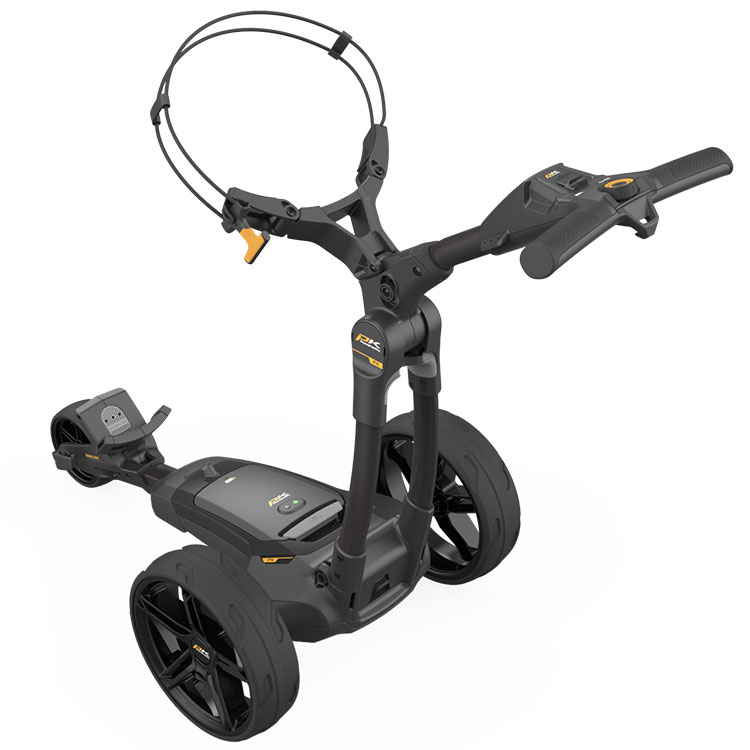
The FX1 is PowaKaddy's entry point into electric trolleys, built to prove that cutting the touchscreen and GPS mapping from the brand's pricier models doesn't mean cutting the build quality that comes with them.

It shares its PowaFrame chassis with the more expensive FX3 and FX5, which multiple reviewers single out as the reason it doesn’t feel like a budget trolley wearing an entry-level badge. The trade-off is deliberate: no screen, no follow-me tech, just a trolley that folds fast, runs quiet and gets out of your way.

In this article
  • PowaKaddy's cheapest current electric trolley, built on the same PowaFrame chassis as the pricier FX3 and FX5
  • 1-Click Fold folds 20% smaller than the previous generation, with near-universal praise for how easy it is to use
  • Deliberately strips out the screen and GPS mapping found on pricier PowaKaddy models
  • Widely rated as one of the best-value electric trolleys currently on the market
First Look

What You Need to Know

  • Build quality doesn’t feel entry-level because it isn’t. The FX1 uses the same PowaFrame chassis as PowaKaddy’s more expensive FX3 and FX5 trolleys.
  • Folding and setup are consistently rated among the easiest of any electric trolley reviewers have tested, thanks to the Plug ‘n’ Play battery and 1-Click Fold frame.
  • There’s no digital screen or GPS, a deliberate simplicity that suits golfers who already use a phone or watch for yardages, less so if you wanted that built in.
  • PowaKaddy backs it with an industry-leading five-year pro rata battery warranty.
8.7
10
Build Quality 9.0
Ease of Use 9.5
Performance 8.5
Features 7.5
Value for Money 9.0

PowaKaddy FX1 Electric Golf Trolley

18-hole lithium battery

PowaKaddy FX1 Electric Golf Trolley 18 Hole Lithium Battery

€598.11
in stock
Clubhousegolf.co.uk

How the PowaKaddy FX1 Performs

The standout point every reviewer makes, independently of each other, is that the FX1 doesn’t feel like a budget trolley. PowaKaddy built it on the same frame used in the pricier FX3 and FX5, and testers who’ve handled the whole range say the FX1 looks and handles like the more expensive units rather than a stripped-down approximation of them. That matters more for a trolley than almost any other piece of golf kit, since a flimsy frame or a wobbly fold undermines the whole point of buying electric in the first place.

Setup and folding get singled out as a genuine strength. The Plug ‘n’ Play 30V lithium battery drops straight into its holder with no wires to connect, and the 1-Click Fold frame collapses in two clicks into a shape 20% smaller than the previous generation. Multiple reviewers specifically call this out as one of the easiest trolleys they’ve used to put up and down, which matters on a cold, muddy morning far more than any spec sheet number does.

The motor itself, a 30V 230W unit, is consistently described as quiet and capable across a range of terrain, with nine speed settings and a pause/resume function that picks up at the same speed you stopped. The trade-off for all of this is the missing screen: there’s no digital display, no GPS mapping, no follow-me functionality. Reviewers who wanted those features on other PowaKaddy models are generally fine with their absence here, since the FX1 is explicitly positioned as the simple option, and a USB-C charging port lets you top up your phone or a separate GPS device on the course instead of building it into the trolley itself.

Key specs

PowaKaddy FX1 Specifications

30V, 230W
Motor
18-hole lithium, Plug 'n' Play system (Extended lithium option also available)
Battery
PowaFrame chassis, shared with the FX3 and FX5
Frame
1-Click Fold, folds 20% smaller than the previous generation
Folding
MAG-LOK system, compatible with recent PowaKaddy bags
Bag attachment
9, with pause/resume function
Speed settings
USB-C port for phone or GPS device
Charging
Height-adjustable, soft-touch, integrated scorecard and pencil holder
Handle
None, deliberately omitted to keep the trolley simple and the price down
Screen / GPS
5-year pro rata
Battery warranty
Best for
Golfers who want PowaKaddy's build quality without paying for a screen they won't use Anyone who already carries a phone or GPS watch for yardages Golfers upgrading from a push trolley or an older, less reliable electric one
Not for
Golfers who specifically want built-in GPS mapping or follow-me technology on the trolley itself, better served by the FX5 or CT range instead
Pros
  • Shares its chassis with PowaKaddy’s more expensive trolleys, so build quality doesn’t feel entry-level
  • Genuinely one of the easiest trolleys to fold and set up that reviewers have tested
  • Quiet, capable 30V motor with nine speed settings
  • MAG-LOK bag attachment and a USB-C charging port are practical, useful touches
  • Industry-leading 5-year pro rata battery warranty
Cons
  • No digital screen, GPS mapping or follow-me technology, a deliberate omission rather than a flaw, but worth knowing if you want it
  • Not the smallest trolley on the market when folded, according to at least one tester, even if it’s still compact enough for most boots
  • PowaKaddy’s own customer service and warranty experience gets mixed reports in general owner reviews, separate from the FX1’s own performance

Where it sits in PowaKaddy's range

The FX1 is the entry point into PowaKaddy's current electric lineup, and it's worth knowing what the step up actually buys you before you decide the simplicity suits you.

  • FX1: covered in this review. The simplest, cheapest electric trolley PowaKaddy currently sells, sharing its chassis with the models above it.
  • FX3: adds a simple digital display and speed controller on top of the same core FX platform.
  • FX5 / FX5 EBS: PowaKaddy’s higher-spec FX model, with more advanced electronic features.
  • CT6: a step further up again, with a full colour touchscreen and more premium positioning.

If you’re tempted by a screen mainly for yardages, it’s worth checking whether your phone or a GPS watch already covers that before paying more for a trolley that duplicates it. Weighing electric against a push trolley, or comparing brands? Our trolley buying guide covers Motocaddy, CaddyTek and the rest alongside PowaKaddy.

Methodology

The Research Behind This Review

We haven’t pushed this trolley around a course ourselves, so rather than fake a hands-on account, we built this review from independent testing published across the golf media, checked against PowaKaddy’s own published specifications.

  • Checked several expert tests

    Read and cross-checked reviews from Golf Monthly, Golfalot, National Club Golfer and The Golf Shop Online.

  • Compared it against PowaKaddy's own range

    Checked how the FX1 is positioned relative to the FX3, FX5 and CT6 to understand what the simplicity actually trades away.

  • Checked general owner feedback

    Looked at broader PowaKaddy customer review and support feedback to flag brand-level patterns separate from the FX1’s own on-course performance.

  • Verified against PowaKaddy specs

    Checked every technical spec against PowaKaddy’s official product documentation.

General PowaKaddy customer service feedback is mixed in places. We’ve flagged that as a brand-level consideration rather than folding it into the FX1’s own performance rating.

What to look for

Checks Before You Commit

01
Decide if you actually need a screen

If you already use a phone app or GPS watch for yardages, the FX1’s lack of a built-in display probably won’t bother you at all.

02
Check your typical round length

The standard battery covers 18 holes. If you regularly play more, or want a safety margin, the Extended lithium battery version is available.

03
Confirm bag compatibility

MAG-LOK works best with recent PowaKaddy bags. Check your own bag will sit securely before assuming full compatibility.

04
Register the warranty promptly

The 5-year pro rata battery warranty is a real selling point, so make sure you register the product to actually benefit from it.

Frequently Asked Questions

What Golfers Ask About the PowaKaddy FX1

Is the PowaKaddy FX1 a budget trolley?

It’s PowaKaddy’s cheapest current electric trolley, but it shares its PowaFrame chassis with the more expensive FX3 and FX5, so build quality is closer to the premium models than the price suggests.

Does the FX1 have GPS or a screen?

No. It’s deliberately stripped back, with no digital display or GPS mapping. A USB-C port lets you charge a separate phone or GPS device instead.

How long does the battery last?

The standard battery covers 18 holes. An Extended lithium battery version is also available for golfers who want extra range.

What's the difference between the FX1 and FX3?

The FX3 adds a simple digital display and speed controller on top of the same core FX platform. The FX5 and CT6 add further electronic features above that.

What warranty does the FX1 come with?

PowaKaddy backs the battery with a 5-year pro rata warranty, which several reviewers note as industry-leading for this price point.

5+ Independent publications referenced
5 years pro rata Battery warranty
On-course tested
Independently reviewed
Ordering from Clubhouse Golf (UK) to Ireland

No surprise charges at the door: VAT and import duty are included in the price and prepaid. Delivery is €7, free over €120, in 2–4 working days.

PowaKaddy FX1 Electric Golf Trolley 18 Hole Lithium Battery
Clubhousegolf.co.uk
€598.11
PowaKaddy FX1 Electric Golf Trolley 18 Hole Lithium Battery
PowaKaddy FX1 Electric Trolley

The FX1 does exactly what an entry-level trolley should do without feeling like a compromise: real PowaKaddy build quality, an easy fold, a quiet motor, and a genuinely strong warranty, all without the price tag of a screen most golfers can live without. If you already get your yardages elsewhere, this is one of the best-value electric trolleys currently available.

Check current price
Categories
Golf Shoes

FootJoy Premiere Series Packard Golf Shoe Review

Explained

FootJoy Premiere Series Packard Golf Shoe Review

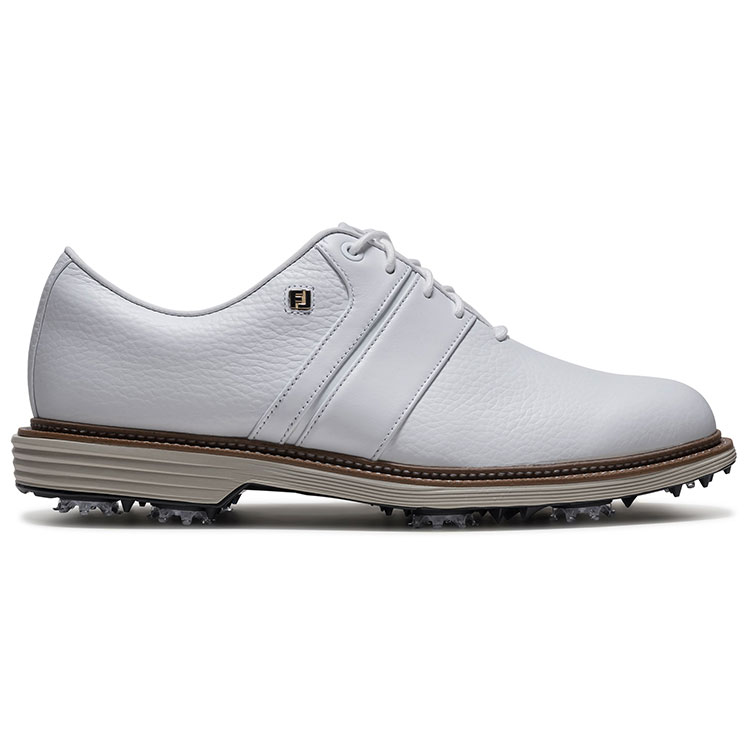
The Packard is the flagship spiked shoe in FootJoy's Premiere Series, the range the brand builds specifically for golfers who want a classic, dressy leather shoe rather than something that looks like a running trainer with spikes bolted on.

It’s named after FootJoy founder Frederick Packard, and reviewers are near-unanimous that it’s one of the best-looking golf shoes on the market. Where opinions genuinely split is comfort out of the box, and whether the premium price is worth it if you’re playing several rounds a week rather than the occasional big one.

In this article
  • FootJoy's flagship classic-leather spiked shoe, sitting at the top of the Premiere Series
  • VersaTrax+ outsole delivers genuinely strong traction, confirmed by multiple testers in wet conditions
  • Comfort is firm out of the box; several testers needed a handful of rounds for the leather to soften
  • Positioned by FootJoy and reviewers alike as a shoe for your best rounds, not necessarily daily grinding
Bottom Line

Premiere Packard in 30 Seconds

  • Looks are close to unanimous praise across every review. This is consistently rated one of the best-looking golf shoes available.
  • The VersaTrax+ outsole delivers genuinely strong grip and stability, including in wet weather, according to multiple independent testers.
  • Comfort starts firm. Several reviewers specifically flagged the heel padding and needed a handful of rounds before the leather softened up.
  • At roughly €230 to €240 RRP, most reviewers frame this as a shoe for special rounds rather than everyday wear, and the cheaper Packard LX exists for a reason.
8.4
10
Looks & Style 9.5
Traction & Stability 9.0
Comfort 7.5
Build Quality 9.0
Value for Money 7.0

FootJoy Premiere Series Packard Golf Shoes

FootJoy's flagship classic-leather spiked shoe

FootJoy Premiere Series Packard 54560 Golf Shoes White

€227.72
in stock
Clubhousegolf.co.uk

What Testers Found

Start with the obvious: reviewers keep coming back to how good this shoe looks. The hand-selected full-grain leather, pebble-grain detailing on the vamp and quarter, calfskin croc-print accents in the saddle and contrast stitching all get singled out, and more than one tester calls it simply the best-looking golf shoe on the market. That’s not a minor point for a shoe built around FootJoy’s classic Premiere styling. It’s the entire reason this shoe exists rather than something more athletic-looking.

Performance backs up the looks. The VersaTrax+ outsole is designed to give 360-degree traction rather than grip in one direction, and testers who played in genuinely poor weather report no slipping and a stable, locked-in feel through the swing. That stability comes with a trade-off familiar to anyone who’s worn a traditional leather golf shoe before: this is a firm, structured shoe, not a soft, flexible one, and it’s noticeably heavier than the athletic-style shoes that now dominate most golfers’ shoe rotation.

Comfort is where the reviews genuinely diverge, and it’s worth taking seriously rather than assuming it’s just personal preference. Multiple testers specifically flagged the heel padding as firmer than they’d like out of the box, with at least one directly comparing it unfavourably to FootJoy’s own HyperFlex line and to adidas’s Tour360 on comfort alone. The consistent finding across reviews is that the leather softens meaningfully after roughly five rounds, so the out-of-box firmness isn’t a permanent flaw, but it is a real break-in period you should expect rather than be surprised by.

Key specs

FootJoy Premiere Series Packard Specifications

Spiked, classic leather
Shoe type
Hand-selected full-grain leather with pebble-grain vamp and quarter
Upper
Calfskin croc-print saddle, natural leather welt, contrast stitching
Accent details
VersaTrax+, 360-degree traction design
Outsole
Advanced cushioning technology, Ortholite tongue
Cushioning
1-year 100% waterproof warranty
Waterproofing
FootJoy founder Frederick Packard
Named after
FootJoy Premiere Packard LX: lighter, more affordable version of the same silhouette
Related model
Best for
Golfers who want a classic, dressy leather look and don't mind a break-in period Occasional or special-round golfers who value style and stability over all-day cushioning
Not for
Golfers who play very frequently and want an out-of-box comfortable, lightweight shoe Anyone wanting a modern athletic silhouette rather than traditional golf shoe styling
Pros
  • Consistently rated one of the best-looking golf shoes on the market
  • VersaTrax+ outsole delivers genuinely strong, stable traction, including in wet weather
  • Premium full-grain leather and craftsmanship that holds up to close inspection
  • 1-year 100% waterproof warranty backs up the premium positioning
  • Versatile enough to wear off the course as well as on it
Cons
  • Firm out of the box, particularly the heel padding, with a genuine break-in period of several rounds
  • Heavier and less flexible than modern athletic-style golf shoes
  • Premium price that several reviewers frame as a stretch for everyday wear
  • Not recommended by reviewers for golfers playing 36 holes or multiple rounds a week, better suited to your best rounds than daily grinding

Which Packard should you buy?

The name covers more than one shoe, and the differences are genuinely worth knowing before you pick a colourway and check out.

  • Premiere Series Packard: covered in this review. The flagship spiked version, full-grain leather, top of the range.
  • Premiere Packard LX: a lighter, more affordable version of the same silhouette. Reviewers found it still firm out of the box but noted the leather softens with wear, same as the standard Packard.
  • Premiere Legends Series Packard: a step above the standard Packard, with additional premium detailing and a higher price to match.
  • Premiere Series Field: a related model in the same Premiere line, slightly different styling for golfers who want the classic look in a different silhouette.

If the standard Packard’s price is more than you want to spend but you like everything else about it, the LX is the obvious place to look first. Comparing golf shoe brands more broadly? Our golf shoes guide covers ECCO, adidas, Nike and the rest alongside FootJoy.

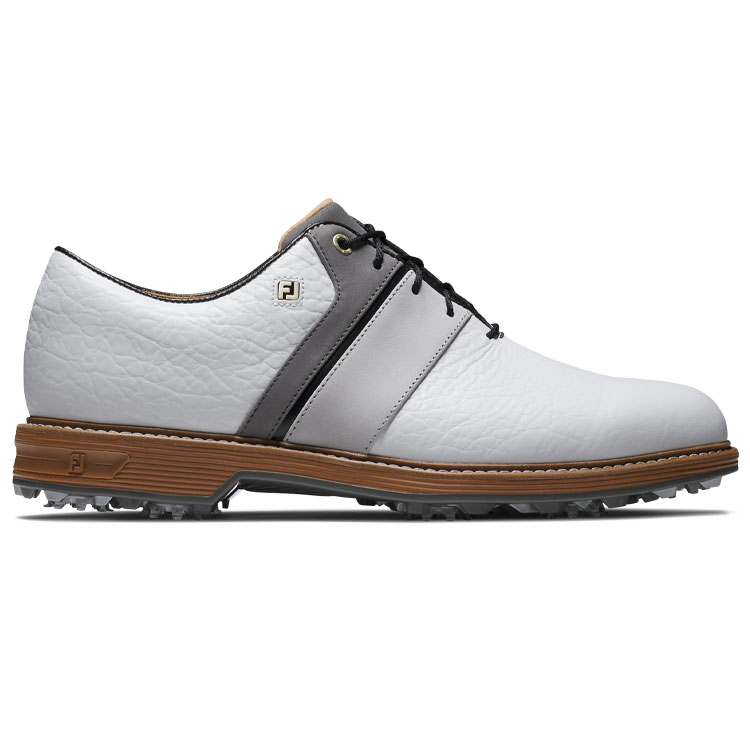
Want to Spend Less? The Packard LX Is Worth a Look

A lighter, more affordable FootJoy Premiere shoe

If the standard Packard’s price is more than you want to spend, the FootJoy Premiere Packard LX carries the same classic silhouette and VersaTrax+ traction system for meaningfully less. It’s a lighter build than the standard Packard, and testers found it firm out of the box in the same way, softening up after a handful of rounds. You lose some of the standard Packard’s premium leather detailing, but the core look and performance carry over.

FootJoy Premiere Series Packard LX 54533 Golf Shoes White/Grey/Black

€167.79
in stock
Clubhousegolf.co.uk
Methodology

How Gary Burke Built This Review

We haven’t worn this shoe ourselves, so rather than fake a hands-on account, we built this review from independent testing published across the golf media, checked against FootJoy’s own published specifications.

  • Multi-round testing

    Read reviews from testers who wore the shoe over multiple rounds, including reports on how the leather changed after the initial break-in period, rather than relying only on first-impression coverage.

  • Compared independent reviews

    Compared reviews and verdicts from Golf Monthly, Golfalot, Today’s Golfer, National Club Golfer and Plugged In Golf.

  • Checked comfort disagreements directly

    Where reviewers disagreed on comfort and break-in time, we included that disagreement rather than picking the more flattering account.

  • Verified against FootJoy specs

    Checked every technical detail against FootJoy’s official product documentation.

Comfort out of the box is the area reviewers disagree on most. We’ve represented that honestly rather than smoothing it into a single verdict.

What to look for

Who Should Buy the Premiere Packard

01
Expect a break-in period

Multiple testers found the heel firm out of the box, softening after roughly five rounds. Budget time to break them in before a big event.

02
Think about how often you'll wear them

Reviewers consistently position this as a shoe for your best rounds rather than daily play. If you play several times a week, weigh that against the price.

03
Check sizing against your usual fit

At least one tester found the fit ran slightly small initially before stretching to match their usual size. Consider trying before you buy if possible.

04
Compare against the LX before paying full price

If the premium leather detailing isn’t essential to you, the Packard LX offers the same core look and traction for less.

Frequently Asked Questions

Premiere Packard: Your Questions Answered

Are FootJoy Premiere Packard golf shoes comfortable?

They’re firm out of the box, particularly around the heel, and several reviewers noted this directly. Most found the leather softened up meaningfully after around five rounds.

Are they good for playing golf every day?

Most reviewers position this as a shoe for special or important rounds rather than daily play, recommending something softer and lighter if you’re playing very frequently.

What's the difference between the Packard and Packard LX?

The LX is a lighter, more affordable version of the same silhouette and traction system, with less of the standard Packard’s premium leather detailing.

Are these shoes waterproof?

Yes, they come with a 1-year 100% waterproof warranty from FootJoy.

Do they run true to size?

Most reviewers found them true to size, though at least one tester noted the fit felt slightly small at first before stretching to match their usual size after a few rounds.

6+ Independent publications referenced
1 year Waterproof warranty
Multi-round tested
Independently reviewed
Ordering from Clubhouse Golf (UK) to Ireland

No surprise charges at the door: VAT and import duty are included in the price and prepaid. Delivery is €7, free over €120, in 2–4 working days.

FootJoy Premiere Series Packard 54560 Golf Shoes White
Clubhousegolf.co.uk
€227.72
FootJoy Premiere Series Packard 54560 Golf Shoes White
FootJoy Premiere Series Packard Golf Shoes

The Packard delivers exactly what it promises: a genuinely classic, premium-looking golf shoe with stable, confident traction. It isn’t the shoe to reach for if you want soft, out-of-box comfort or you’re playing several rounds a week. The firmness and break-in period are real, not overstated in reviews. But for golfers who want to look and feel the part on their best rounds, this remains one of the standout classic golf shoes available.

Check current price
Categories
Irons

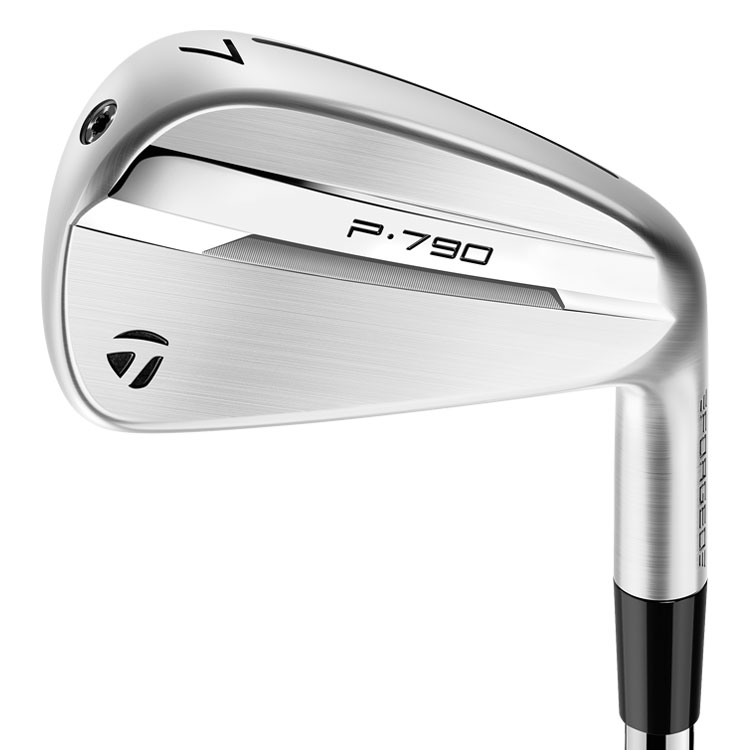
TaylorMade P790 Irons Review

Explained

TaylorMade P790 Irons Review

Now in its fifth generation, the P790 is the iron that created the players-distance category back in 2017 and has stayed at or near the top of the sales charts ever since. The 2025 version is a genuine refinement rather than a reinvention, and reviewers are largely in agreement about where the real gains are, and where TaylorMade's marketing numbers outrun what testers actually measured.

We’ve pulled together independent testing, including at least one reviewer’s own launch monitor numbers set against TaylorMade’s official claims, to work out what’s genuinely new here and who it actually suits.

In this article
  • Fifth generation of TaylorMade's players-distance category, refined rather than reinvented for 2025
  • New 4340M forged face and FLTD CG weighting bring real gains in feel and consistency
  • TaylorMade's '24% larger sweet spot' claim wasn't fully confirmed by at least one independent field test
  • Aimed at low-to-mid handicappers; TaylorMade itself points higher handicappers toward the Qi range instead
Fast Facts

P790 Irons Summed Up

  • Feel is the clearest genuine upgrade over the 2023 model: softer, more consistent throughout the set rather than getting louder and more explosive in the long irons.
  • An independent field test found off-centre strike performance very close to the 2023 model, despite TaylorMade’s claim of a 24% larger sweet spot.
  • Strong lofts and a lower spin profile mean golfers who already spin the ball low may see shots that don’t check up as quickly as they’d like.
  • If you’re already gaming a recent-generation P790, most reviewers describe this as an evolution, not a reason to upgrade.
8.6
10
Distance 9.0
Feel 9.0
Forgiveness 8.5
Looks & Address 8.5
Value for Money 7.0

TaylorMade P790 Irons (Steel Shafts)

The fifth-generation players-distance benchmark

TaylorMade P790 Golf Irons Steel Shafts

€1,281.31
in stock
Clubhousegolf.co.uk

Out on the Course

The headline change for 2025 is the face. TaylorMade moved to a new 4340M forged material that’s rated 20% stronger than the previous generation’s, which let engineers make it thinner and faster while using individual head optimisation and modal analysis to fine-tune feel across every club in the set. Reviewers who tested both generations side by side describe a genuine step forward here: the 2023 P790 ran softer and quieter in the short irons but louder and more explosive in the long irons, while the 2025 set keeps a consistent, soft feel with a crisp click throughout the whole bag.

TaylorMade’s other headline claim is a 24% larger sweet spot compared to the previous generation, and this is where reviews genuinely diverge. At least one independent tester who ran a proper field test measured ball speed and stability drop-off on off-centre strikes and found it very close to, if not virtually identical to, the 2023 model, rather than the meaningful jump the marketing suggests. That doesn’t mean the forgiveness claim is false so much as overstated. Real-world testers still describe the P790 as genuinely forgiving for a players-distance iron, just not dramatically more so than the set it replaced.

Distance and gapping get more attention than almost anything else with this iron, and results here are mixed depending on the tester. One reviewer with above-average swing speed found no meaningful, consistent distance gap between the 4-iron and 5-iron, because launch was simply too low at the top of the set, a fitting issue worth knowing about if you carry long irons. Others found gapping through the main scoring irons, particularly 7-iron to 8-iron, notably improved and consistent compared to previous P790 generations, which had a reputation for occasional distance-gapping problems. The takeaway across reviews is consistent: this is still a very long iron on pure strikes, with excellent results on mishits, but proper fitting matters more here than the spec sheet suggests.

Key specs

TaylorMade P790 (2025) Specifications

5th generation P790, launched 2025
Generation
Forged hollow-body, 8620 carbon steel body
Construction
4340M forged face, 20% stronger than previous generation
Face
SpeedFoam Air
Internal fill
FLTD CG, up to 40g tungsten, progressively placed through the set
Weighting
Thru-Slot Speed Pocket for lower CG and higher launch
Long irons
Tour Satin Scratch
Finish
4-iron to AW (20 to 49 degrees); sets and singles available
Loft range
KBS TOUR LITE
Stock steel shaft
Mitsubishi MMT
Stock graphite shaft
Golf Pride ZGRIP Plus2
Stock grip
Roughly +2 to 20, best suited to low-to-mid handicappers
Recommended handicap range
Best for
Golfers upgrading from an older iron set who want distance and forgiveness in a genuine players-look iron Low-to-mid handicappers who want a compact, premium look without sacrificing playability
Not for
Golfers already on a 2021 to 2023 generation P790, since the gains are incremental High handicappers, who TaylorMade itself points toward the Qi range instead Golfers who already spin the ball low and want more greenside stopping power
Pros
  • Genuinely improved, more consistent feel throughout the set compared to the 2023 model
  • Excellent distance on pure strikes with strong results on mishits
  • Refined, more compact Tour Satin Scratch look without any real drop in forgiveness
  • Wide loft range and sensible progressive CG design for launch and control
  • Available in both steel and graphite shafts, right and left handed
Cons
  • Independent field testing found off-centre forgiveness close to the previous generation, despite the ‘24% larger sweet spot’ claim
  • Among the more expensive players-distance iron sets on the market
  • Marginal upgrade if you’re already gaming a recent-generation P790, evolution rather than revolution
  • Strong lofts and lower spin can mean shots that don’t stop as quickly for golfers who already spin the ball low
  • At least one tester found inconsistent long-iron gapping (4-iron to 5-iron) at higher swing speeds

Where it sits in TaylorMade's range

The P790 is TaylorMade's flagship players-distance iron, but it isn't the only option at this level, and it isn't the cheapest way into TaylorMade's current technology either.

  • P770: near-identical performance and feel to the P790, with lofts around 2° weaker per club. A touch less distance, same refined look, often blended with the P790 in a combo set.
  • P790: covered in this review. The benchmark players-distance iron: distance, forgiveness and a compact look in one set.
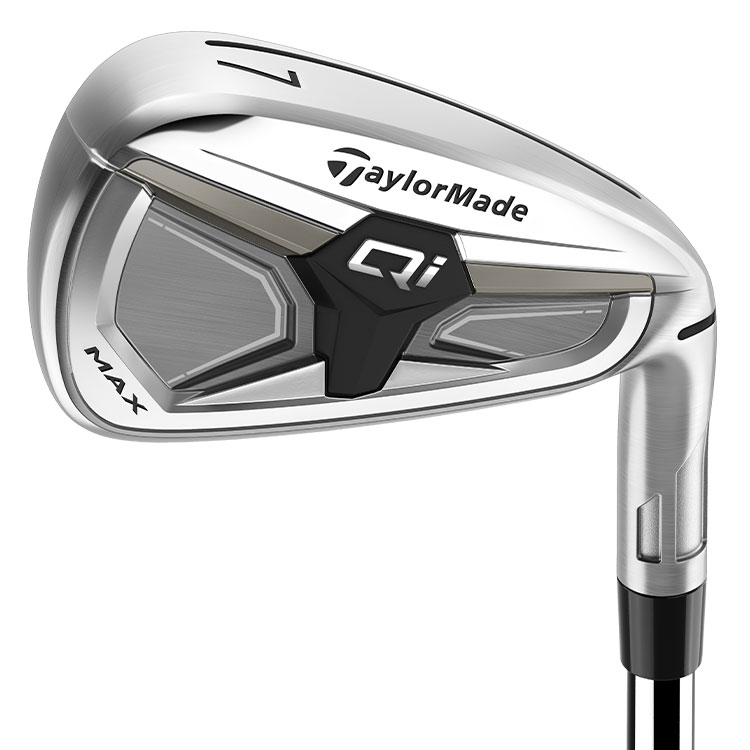
  • Qi Max / Qi Max HL / Qi Gunmetal: TaylorMade’s more game-improvement-focused current irons, meaningfully cheaper and more forgiving for higher handicaps, at the cost of the P790’s compact players look.
  • P7MB / P7CB: tour-level blades and cavity backs for better players who want maximum workability and are willing to give up forgiveness to get it.

If the P790’s price is the sticking point rather than its performance category, TaylorMade’s own Qi Max line gets a lot of golfers most of what they actually want for meaningfully less. Weighing it against other brands too? Our iron sets guide runs through Callaway, PING, Mizuno and the rest.

Want to Spend Less? The Qi Max Is Worth a Look

A more forgiving, more affordable TaylorMade iron

If about €1,280 is more than you want to spend on a set of irons, TaylorMade’s own Qi Max costs meaningfully less and leans further into forgiveness for higher handicaps. You give up the P790’s compact players look and some of its workability, but you keep TaylorMade’s current-generation face technology and a genuinely easy-to-hit iron for golfers who need more help on off-centre strikes than the P790 is really designed to give.

TaylorMade Qi Max Golf Irons Steel Shafts

€1,029.61
in stock
Clubhousegolf.co.uk
Methodology

Our Sources for This Review

We haven’t played this set ourselves, so rather than fake a hands-on account, we built this review from independent testing and launch monitor data published across the golf media, checked against TaylorMade’s own published specifications.

  • Independent field testing

    Compared launch monitor data on off-centre strikes against TaylorMade’s own marketing claims, rather than repeating the official figures uncritically.

  • Matched reviewer findings

    Read and cross-checked reviews from National Club Golfer, Golfalot, Plugged In Golf, Golf Monthly, Today’s Golfer and Golfer Geeks.

  • Checked owner and forum feedback

    Included reader questions and owner responses from Plugged In Golf’s comment section for real-world fitting concerns that don’t always show up in first-look reviews.

  • Verified against TaylorMade specs

    Checked every technical spec, loft and shaft option against TaylorMade’s official product documentation.

Where independent testing didn’t fully back up TaylorMade’s own marketing claims, particularly on sweet spot size, we’ve said so rather than repeating the number that flatters the club.

What to look for

P790 Irons Buying Checklist

01
Get properly fitted, especially the long irons

At least one tester with above-average swing speed found the 4-iron and 5-iron didn’t gap consistently. A fitting will catch this before you buy a full set.

02
Know your spin profile

If you already spin the ball low, the P790’s strong lofts and low-spin design can mean shots that release more than you’d like on the green.

03
Decide if you're upgrading for a real reason

If you already have a 2021–2023 P790, most reviewers found the 2025 gains incremental rather than essential.

04
Consider a combo set

Several reviewers blend the P790’s forgiving long irons with the more compact P770 or P7MB in the scoring clubs for the best of both.

Frequently Asked Questions

Common Questions About the P790 Irons

Is the 2025 TaylorMade P790 worth upgrading to from an older P790?

Feel is genuinely improved, but most reviewers describe the performance gains as incremental rather than essential if you already own a 2021–2023 P790. It’s a stronger case if you’re coming from an older set or a different brand entirely.

Is the P790's 24% larger sweet spot claim accurate?

At least one independent field test found off-centre strike performance very close to the previous generation, rather than a dramatic jump. Treat the figure as directional marketing rather than a guaranteed real-world result.

What handicap is the P790 best suited to?

TaylorMade markets it to roughly a 0–15 handicap, and most reviewers agree it suits low-to-mid handicappers best. TaylorMade itself recommends higher handicappers look at the Qi range instead.

What's the difference between the P790 and P770?

Very similar performance and feel, with the P770 carrying lofts around 2° weaker per club, which usually means slightly less distance. Many golfers blend the two in a combo set.

Does the P790 come in graphite shafts?

Yes, alongside the steel shaft version reviewed here, TaylorMade offers a graphite-shafted option with the Mitsubishi MMT as the stock shaft.

8+ Independent publications referenced
8 Years as the players-distance benchmark
Launch monitor tested
Independently reviewed
Ordering from Clubhouse Golf (UK) to Ireland

No surprise charges at the door: VAT and import duty are included in the price and prepaid. Delivery is €7, free over €120, in 2–4 working days.

TaylorMade P790 Golf Irons Steel Shafts
Clubhousegolf.co.uk
€1,281.31
TaylorMade P790 Golf Irons Steel Shafts
TaylorMade P790 Irons (Steel Shafts)

The 2025 P790 is a genuine refinement of the iron that built the players-distance category, with a real step forward in feel and a more consistent set from top to bottom. The forgiveness claims outrun what independent testing actually found, and the price sits at the top of the category, but for golfers wanting distance and playability in a compact, premium-looking iron, this remains the benchmark most rivals are still chasing.

Check current price
Categories
Putters

Odyssey Ai-ONE Putter Review

Explained

Odyssey Ai-ONE Putter Review

The Ai-ONE is Odyssey's first putter line built around an AI-designed face insert, putting the same face-optimisation technology Callaway uses in its drivers into a putter for the first time, wrapped in traditional, tour-proven head shapes rather than anything radical-looking.

It comes in far more shapes than most putters ever do, from classic blades to forgiving mallets, which is exactly why it’s worth being clear up front about what’s actually being tested here. Independent testing has consistently backed up Odyssey’s core claim: mishits genuinely do come off more consistently than on a traditional insert. Where opinions split is on feel, and on whether the price is worth it over Odyssey’s own cheaper options.

In this article
  • Odyssey's first putter to use an AI-designed face insert, developed by sister company Callaway
  • Available in far more head shapes than most putter lines, from blades to mallets and everything between
  • Independent testing confirms more consistent ball speed on off-centre strikes than a traditional face
  • Feel is genuinely divisive: some testers find it soft and forgiving, others find it comes off faster than expected
Our Take

The Headline Points

  • Launch monitor testing found the Ai-ONE face genuinely reduces smash-factor variance on mishits compared to a traditional milled or insert face.
  • It comes in a wide range of head shapes, including the #1, #2, #7, Double Wide, Rossie and 2-Ball Jailbird, so picking the right one matters more than the AI tech itself.
  • Feel is where testers disagree most: several describe it as soft and classic White Hot, at least one found it noticeably faster off the face than expected.
  • It sits below the pricier Ai-ONE Milled line, which uses the same face tech in a fully milled body for a firmer feel and a higher price.
8.5
10
Forgiveness 9.0
Feel 8.0
Alignment & Looks 8.5
Shape Variety 9.5
Value for Money 7.5

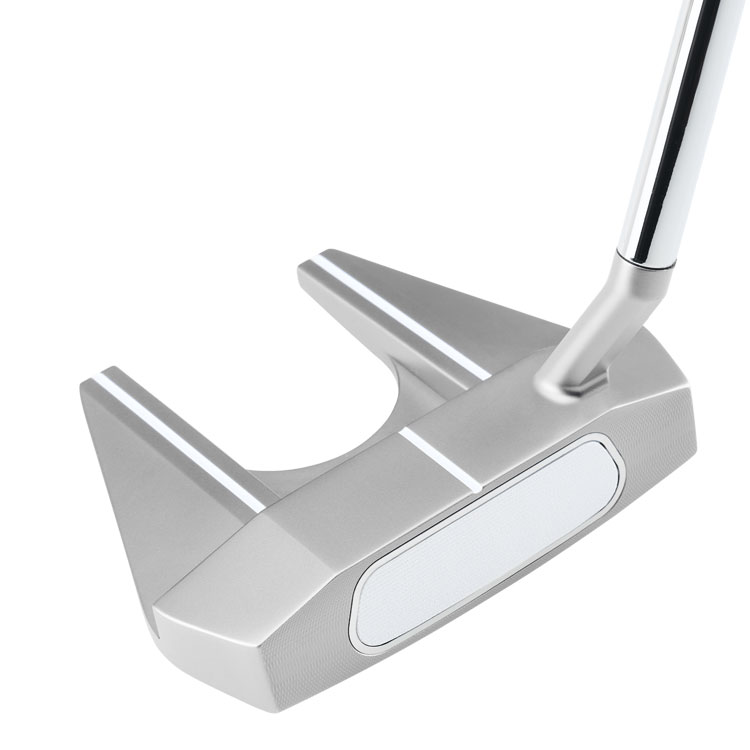
Odyssey Ai-ONE Silver #7 S Putter

A classic Anser-style blade, one of the most popular Ai-ONE shapes

Odyssey Ai-ONE Silver #7 S Golf Putter

€214.55
in stock
Clubhousegolf.co.uk

How the Ai-ONE Putter Plays

The headline technology is the face. Odyssey worked with Callaway to design a contoured, AI-optimised backing behind a White Hot urethane insert, aiming to keep ball speed more consistent across mishits rather than just the centre of the face. Independent testing with a launch monitor backs this up: reviewers who compared the Ai-ONE directly against a traditional milled face measured roughly half the smash-factor variance across twenty test putts, meaning strikes away from the sweet spot lost noticeably less speed and stayed on a tighter line than with a conventional insert. That’s a genuinely measurable result, not just marketing copy, and it’s the strongest part of this putter’s case.

Feel is where the reviews stop agreeing. Most testers describe the White Hot insert as delivering Odyssey's familiar soft, muted sound and feel at impact, and several say it's actually softer and slower off the face than the older White Hot Versa putters. At least one long-term forum tester found the opposite: a putter that felt notably fast and "hot" off the face compared to what they were used to, more like a rocket than a controlled roll. That's a real disagreement between experienced testers, not just personal taste getting reported differently, and it's worth trying before you buy if you can.

One thing everyone agrees on: the sheer range of head shapes. Odyssey launched the Ai-ONE across roughly a dozen different shapes, including the classic Anser-style #7, the more rounded #1 and #2, wide-body mallets like the Double Wide, offset shapes like the Rossie, and 2-Ball style Jailbird models. That matters more for a putter than for almost any other club in the bag, since shape, toe hang and alignment preference are deeply personal. Reviewers who tried multiple shapes noted a genuinely different look and balance across the range, so the AI face technology is really a constant sitting underneath a proper putter fitting decision, not a replacement for one.

Key specs

Odyssey Ai-ONE Silver #7 S Specifications

#7 (classic Anser-style blade)
Head shape
AI-designed aluminium-backed White Hot urethane insert
Face insert
Stroke Lab, single-tone steel construction
Shaft
20 to 30g in the grip end, depending on grip choice
Counterbalance
Silver (current-generation colourway)
Finish
Ai Window: Panlite back window showing the insert design
Feature
33 to 35 inches (standard fitting range)
Available lengths
Odyssey Ai-ONE Milled: same tech, fully milled body, higher price
Related line
Best for
Golfers who three-putt more than they'd like from off-centre strikes Anyone already comfortable with Odyssey's White Hot feel who wants more forgiveness Players who want to try several head shapes before committing to one
Not for
Golfers who specifically want a firmer, milled feel, best served by the Ai-ONE Milled line instead Anyone who hasn't been fitted for head shape, length and toe hang, since that matters more here than the face tech
Pros
  • Measurably more consistent ball speed on mishits than a traditional putter face, confirmed by independent launch monitor testing
  • Huge range of head shapes covers blades, mallets and everything in between
  • Classic Odyssey White Hot feel and sound for most testers
  • Stroke Lab shaft adds genuine stability without an unusual look
  • Meaningfully cheaper than the Ai-ONE Milled line for very similar core performance
Cons
  • Feel is genuinely divisive: some testers find it soft, at least one found it faster off the face than expected
  • Premium price compared to non-AI putters at a similar build quality
  • Odyssey’s own “21% closer to the hole” marketing claim has been questioned as an optimistic extrapolation rather than a guaranteed outcome
  • Picking the wrong head shape matters more than the AI face technology itself

Which Ai-ONE shape should you buy?

The AI face insert is identical across the range. What changes is head shape, offset and how the putter sits at address, and that's the decision that actually affects your stroke.

  • #7: covered in this review. The classic Anser-style blade, probably the most familiar Odyssey silhouette.
  • #1 / #2: more rounded blade shapes, popular with golfers who prefer a softer-edged look at address.
  • Double Wide: a wider blade-mallet hybrid for extra forgiveness without going fully mallet.
  • Rossie: offset, flanged shape favoured by golfers who like extra alignment help.
  • 2-Ball Jailbird / Jailbird Mini: Odyssey’s mallet heritage shape, maximum alignment assistance.
  • Cruiser: an extended, counterbalanced version for golfers using an arm-lock or belly-style stroke.

If you already know which Odyssey shape suits your eye, stick with it. The AI face is a genuine upgrade on top of whichever one you pick, not a reason to change shape. Still weighing it against other brands? Our putter buying guide covers Scotty Cameron, TaylorMade and PING alongside Odyssey.

Methodology

Where Our Verdict Comes From

We haven’t putted with this ourselves, so rather than fake a hands-on account, we built this review from independent testing and long-term owner feedback published across the golf media, checked against Odyssey’s own published specifications.

  • Launch monitor testing

    Compared independent smash-factor and dispersion testing against a traditional milled face, rather than relying on Odyssey’s own marketing figures alone.

  • Read the published tests

    Read and cross-checked reviews from Plugged In Golf, Golfalot, National Club Golfer, Today’s Golfer, Bang Average Golf and Independent Golf Reviews.

  • Checked forum and long-term owner feedback

    Included MyGolfSpy’s multi-tester forum review and GolfWRX owner discussion for real-world feel reports that don’t always show up in press-day reviews.

  • Verified against Odyssey specs

    Checked every technical spec against Odyssey’s official product documentation.

Where testers disagreed, mainly on feel, and on how much weight to give Odyssey’s own marketing claims, we’ve included that disagreement rather than smoothing it over.

What to look for

Before You Order the Ai-ONE Putter

01
Get fitted for head shape first

Toe hang, offset and alignment preference matter more to your stroke than the face insert. A fitting will tell you far more than any review can.

02
Try before you commit if you can

Feel is the most divisive part of this putter across reviews. What one tester calls soft and forgiving, another calls fast and hot off the face.

03
Decide between Ai-ONE and Ai-ONE Milled

Same face technology, different body and price. The Milled line costs meaningfully more for a firmer feel and more premium build, not better core performance.

04
Don't over-weight the marketing numbers

The ‘21% closer to the hole’ claim is based on optimistic modelling, not a guarantee. Treat it as directional, not a promise.

Frequently Asked Questions

Ai-ONE Putter FAQ

Is the Odyssey Ai-ONE putter worth it?

Independent testing backs up the core claim: mishits genuinely stay more consistent than with a traditional face. Whether it’s worth the price over a non-AI Odyssey putter depends on how much forgiveness matters to your particular stroke.

What's the difference between Ai-ONE and Ai-ONE Milled?

Both use the same AI-designed face technology. The Milled version has a fully milled body and a firmer feel, at a noticeably higher price. Performance between them is very close.

Which Ai-ONE head shape should I buy?

Whichever shape already suits your eye and stroke. The AI face is consistent across every shape, so the head shape decision should be based on toe hang, offset and alignment preference, ideally from a proper fitting.

Is the '21% closer to the hole' claim accurate?

It’s based on Odyssey’s own modelling using Shot Link data, and has been questioned by some testers as an optimistic extrapolation rather than a lab-tested guarantee. Treat it as a directional claim, not a fixed outcome.

Does the Ai-ONE putter come left-handed?

Selected shapes are available left-handed, though the range is narrower than the right-handed lineup. Check the specific head shape you want for availability.

7+ Independent publications referenced
12+ Head shapes in the Ai-ONE range
Launch monitor tested
Independently reviewed
Ordering from Clubhouse Golf (UK) to Ireland

No surprise charges at the door: VAT and import duty are included in the price and prepaid. Delivery is €7, free over €120, in 2–4 working days.

Odyssey Ai-ONE Silver #7 S Golf Putter
Clubhousegolf.co.uk
€214.55
Odyssey Ai-ONE Silver #7 S Golf Putter
Odyssey Ai-ONE Silver #7 Putter

The Ai-ONE genuinely delivers on its core promise: mishits come off more consistently than they do on a traditional face, and independent testing backs that up rather than just Odyssey’s marketing. Feel is the one area where reviewers really split, so trying before you buy is worth the effort if you can manage it. For golfers who already like Odyssey’s White Hot heritage and want a measurable forgiveness upgrade in a familiar shape, this is an easy recommendation.

Check current price
Categories
GPS Watches

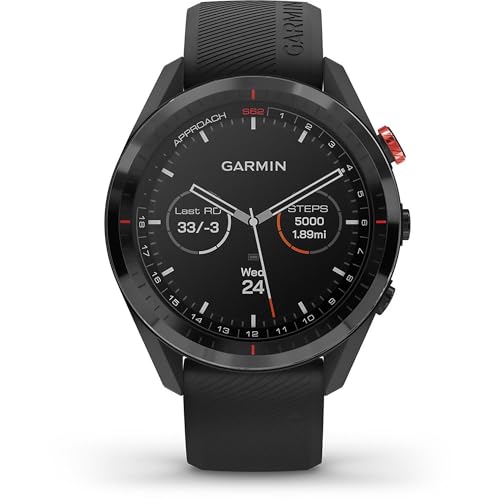
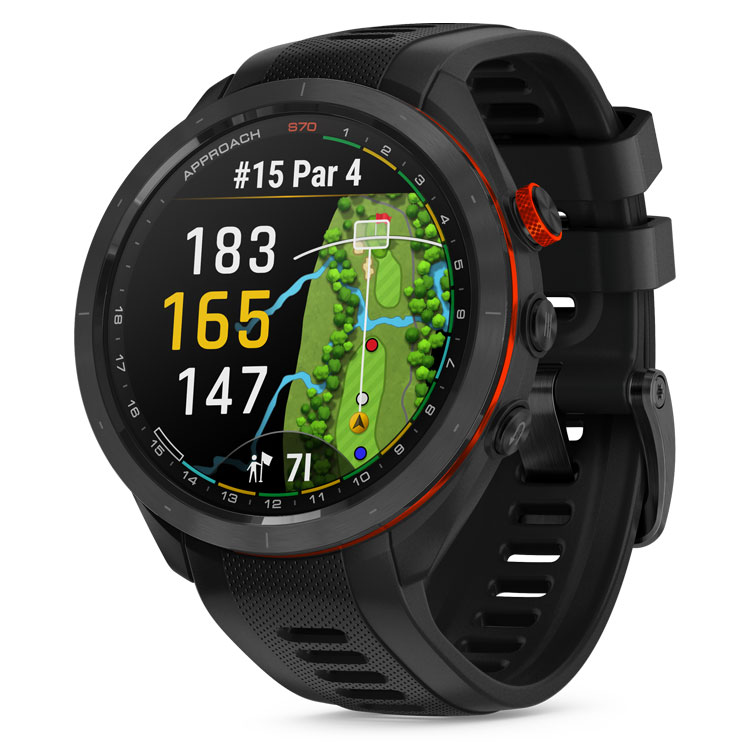
Garmin Approach S70 Golf GPS Watch Review

Explained

Garmin Approach S70 Golf GPS Watch Review

The Approach S70 is Garmin's flagship golf GPS watch, replacing the long-running S62 with a genuinely sharper AMOLED display, a wider set of on-course tools and one of the best battery lives of any smartwatch on the market, for a price that most reviewers openly admit is difficult to justify on spec alone.

It’s not a subtle upgrade. Every independent review we looked at agrees the display, the PlaysLike distance tool and the Virtual Caddie feature are genuinely useful rather than gimmicks. The disagreement, where it exists, is almost entirely about whether any golf watch is worth what Garmin is charging for this one.

In this article
  • Garmin's most advanced golf GPS watch, replacing the Approach S62 as the flagship
  • AMOLED touchscreen display rated the best Garmin has put on a golf watch
  • Real-world battery life regularly exceeds Garmin's own conservative estimate
  • One of the most expensive golf GPS watches on the market, and reviewers are upfront about that
In Brief

Should You Buy the Approach S70?

  • Battery life is the standout: Garmin rates it at 16 days in smartwatch mode, and multiple testers reported going two to three weeks between charges with regular golf use.
  • The AMOLED display and touchscreen are the biggest jump over the S62, though at least one reviewer found the touchscreen interface fiddly to use mid-round.
  • PlaysLike Distance and the Virtual Caddie are described as genuinely useful by every reviewer we checked, not marketing filler.
  • The price is the sticking point across the board. This sits at the very top of the golf GPS watch market.
8.7
10
GPS Accuracy 9.0
Display & Usability 9.0
Battery Life 9.5
Golf-Specific Features 9.5
Value for Money 6.5

Garmin Approach S70 Golf GPS Watch

Garmin's flagship golf GPS watch, in 47mm

Garmin Approach S70 47mm Golf GPS Watch Black

€574.13
in stock
Clubhousegolf.co.uk

Performance: What Reviewers Found

The first thing every reviewer mentions is the display. Garmin moved to a full AMOLED panel for the S70, and testers consistently describe it as the best screen the company has ever put on a golf watch, bright, colourful hole maps that are genuinely easy to read in direct sunlight, with an always-on mode so you’re not constantly waking the screen. The touchscreen adds pinch-to-zoom and swipe gestures that weren’t possible on the button-only S62, though it’s worth flagging that at least one detailed review found the touchscreen interface fiddly to operate one-handed mid-round, a fair trade-off to know about before you buy.

On-course, the features reviewers keep coming back to are PlaysLike Distance and the Virtual Caddie. PlaysLike factors in elevation change, wind and air density using a built-in barometer to give an adjusted yardage rather than just the raw number, and the Virtual Caddie learns your actual club distances over time to suggest what to hit. Testers who’ve used both for months describe them as quietly changing how they plan shots, rather than being features that look good in a spec sheet and get ignored on the course.

GPS accuracy itself is good rather than laser-precise, and every review is upfront about that distinction: expect readings within a couple of yards of a rangefinder, which is more than accurate enough for club selection but not the tool to reach for if you need exact yardage to the inch. Battery life is where the S70 genuinely separates itself from most golf watches. Garmin’s own claim of 16 days in smartwatch mode already sounds strong, and several testers reported beating it in real use, with multiple full rounds plus a week or more of everyday wear on a single charge, and one reviewer going ten days on vacation without a charger and never coming close to running out.

Key specs

Garmin Approach S70 (47mm) Specifications

47mm (42mm also available)
Case size
56g (44g for the 42mm)
Weight
Ceramic bezel, Corning Gorilla Glass 3
Case / bezel
AMOLED touchscreen, 390 x 390px, always-on mode
Display
5 ATM
Water resistance
32GB
Storage
43,000+ worldwide
Preloaded courses
Up to 16 days (47mm) / 10 days (42mm)
Battery (smartwatch mode)
Up to 20 hours (47mm) / 15 hours (42mm)
Battery (GPS/golf mode)
Proprietary USB-C charging cable
Charging
GPS, heart rate, Pulse Ox, barometer
Sensors
Garmin Approach S62
Replaces
Best for
Golfers who want Garmin's most complete golf watch and value battery life above almost everything else Players who also want strong everyday fitness and health tracking from the same device Anyone upgrading from a watch that needs daily charging
Not for
Golfers who only want basic yardages and don't need smartwatch extras Budget-conscious buyers: the S12, S44 or S50 cover most of the same core golf features for less
Pros
  • The best display Garmin has ever put on a golf watch, bright and clear even in direct sun
  • Exceptional real-world battery life that regularly beats Garmin’s own conservative rating
  • PlaysLike Distance and Virtual Caddie are genuinely useful, not gimmicks
  • 43,000+ preloaded courses and no subscription required
  • Doubles as a capable everyday fitness and smartwatch, with heart rate and Pulse Ox tracking
Cons
  • One of the most expensive golf GPS watches on the market by a clear margin
  • Touchscreen interface can feel fiddly to operate one-handed mid-round
  • Proprietary charging cable reported as inconveniently short by at least one reviewer
  • Less full-featured as an everyday smartwatch than a dedicated Apple Watch or Garmin fitness line
  • GPS yardages are accurate but not laser-precise, as with any GPS watch

Where it sits in Garmin’s Approach range

The S70 is the top of a wide Garmin lineup, and the step down in price to the next model is significant, worth knowing before you commit to the flagship.

  • Approach S12: the budget entry point, no colour display, but genuinely capable core GPS and excellent battery life for a fraction of the price.
  • Approach S44: mid-range, colour touchscreen, most of the everyday golf features without the AMOLED display or ceramic build.
  • Approach S50: sits just below the S70, with a similar feature set at a noticeably lower price.
  • Approach S70: covered in this review. The flagship: AMOLED display, ceramic bezel, the fullest set of golf and fitness features Garmin offers on a golf watch.

If the AMOLED screen and the extra smartwatch polish don’t matter to you, the S50 gets you very close to the same on-course experience for meaningfully less money. Not sold on Garmin specifically? Our GPS watch comparison covers how Shot Scope, SkyCaddie and Bushnell stack up against it.

Want to Spend Less? The Outgoing S62 Is Worth a Look

Garmin's previous flagship, now cheaper

If the S70’s price is the sticking point, the Garmin Approach S62 it replaced is still sold and usually costs meaningfully less. It carries most of the same on-course substance, including Virtual Caddie, full-colour mapping and the huge course library Garmin built its reputation on, just without the AMOLED screen, the ceramic bezel or the newer PlaysLike barometer feature.

Garmin 010-02200-00 Approach S62, Premium Golf GPS Watch, Built-in Virtual Caddie, Mapping and Full Color Screen, Black

€429.22
in stock
Amazon.ie
Methodology

How We Researched the Approach S70

We haven’t worn this watch ourselves, so rather than fake a hands-on account, we built this review from independent, long-term testing published across the golf and tech media, checked against Garmin’s own published specifications.

  • Long-term testing

    Read reviews from testers who wore the watch for weeks or months, including a two-year daily-wear account, rather than relying only on first-impression coverage.

  • Checked several expert tests

    Compared reviews and verdicts from MyGolfSpy, PlayBetter, Plugged In Golf, TechRadar, Wareable, Breaking Eighty, Today’s Golfer and Independent Golf Reviews.

  • Checked real-world battery reports

    Compared Garmin’s official battery claims against multiple independent, multi-week usage reports rather than quoting the marketing figure alone.

  • Verified against Garmin specs

    Checked every technical spec, including sizes, weight and water resistance, against Garmin’s official product documentation.

Where reviewers disagreed, mainly on the touchscreen interface and whether the price is justified, we’ve included that disagreement rather than smoothing it over.

What to look for

Is the Approach S70 Right for You?

01
Decide if you need the AMOLED display

It’s the single biggest upgrade over cheaper Garmin watches. If screen quality isn’t a priority for you, the S50 or S44 will save you real money.

02
Pick your size

The 47mm gets the longer battery life (16 days vs 10). The 42mm suits smaller wrists but trades some battery life to get there.

03
Check your club/course rules on watches

Some competitions restrict GPS devices during play. Confirm your club and competition rules before relying on it in a card round.

04
Think about the charging cable

It’s proprietary, and at least one reviewer found it inconveniently short. Worth knowing if you travel with it.

Frequently Asked Questions

What Golfers Ask About the Approach S70

Is the Garmin Approach S70 worth the extra money over the S50?

If the AMOLED display, ceramic build and extra smartwatch polish matter to you, most reviewers say yes. If you mainly want accurate on-course yardages and the core Garmin golf features, the S50 gets you close to the same experience for less.

How long does the battery actually last?

Garmin rates the 47mm at up to 16 days in smartwatch mode and 20 hours in GPS mode. Independent testers have reported matching or beating that, with some going two to three weeks of mixed use between charges.

Does the Garmin Approach S70 need a subscription?

No. Garmin’s golf watches, including the S70, don’t require an ongoing subscription to use the core GPS and course features.

What sizes does it come in?

42mm and 47mm. The 47mm is only available in black; the 42mm comes in additional colour options and has a shorter battery life.

Is it waterproof?

It’s rated 5 ATM, meaning it can handle rain, showering and swimming, though it isn’t designed as a dedicated dive watch.

8+ Independent publications referenced
16 days Rated battery life (47mm, smartwatch mode)
Long-term tested
Independently reviewed
Ordering from Clubhouse Golf (UK) to Ireland

No surprise charges at the door: VAT and import duty are included in the price and prepaid. Delivery is €7, free over €120, in 2–4 working days.

Garmin Approach S70 47mm Golf GPS Watch Black
Clubhousegolf.co.uk
€574.13
Garmin Approach S70 47mm Golf GPS Watch Black
Garmin Approach S70 Golf GPS Watch

The Approach S70 is the most complete golf GPS watch Garmin makes, with a genuinely excellent display, battery life that outlasts almost everything else on the market, and on-course tools that reviewers consistently describe as useful rather than gimmicky. None of that changes the fact that this sits at the very top of the price range for golf watches, and if budget matters, the S50 underneath it gets you most of the same experience for meaningfully less. For golfers who want the best Garmin makes and don’t mind paying for it, this delivers.

Check current price
Categories
Drivers

Ping G440 Max Driver Review

Explained

Ping G440 Max Driver Review

The Ping G440 Max is the forgiveness-first driver in Ping's current lineup, built for the majority of golfers who lose distance and accuracy to off-centre strikes rather than a lack of raw swing speed.

It replaces the G430 Max, a driver that carried a five-star reputation of its own, so the G440 Max has an unusually high bar to clear. We’ve pulled together launch monitor data, player testing and expert verdicts from across the golf media to work out where it actually delivers, and where the marketing runs ahead of the numbers.

In this article
  • Most forgiving driver in Ping's current range
  • Lower, deeper CG than the G430 for higher launch at the same loft
  • Sits in the mid-to-high pack for outright distance, not the top of it
  • Best fit for mid-to-high handicappers and anyone who needs tighter dispersion
At a Glance

What You Need to Know

  • Independent robot testing places the G440 Max below average for pure distance at faster swing speeds, despite strong editorial reviews.
  • Forgiveness and dispersion are where it consistently wins, with testers reporting tighter shot patterns than the G430 Max.
  • The CarbonFly Wrap crown and Free Hosel design combine for a noticeably quieter, more premium sound at impact.
  • It’s one of three head shapes (Max, LST, SFT) plus a newer high-MOI K version, and each is built for a different miss.
8.4
10
Forgiveness 9.5
Sound & Feel 9.0
Distance 7.5
Adjustability 8.5
Value for Money 7.0

Ping G440 Max Driver

The most forgiving head in Ping's G440 range

Ping G440 Max Golf Driver

€634.06
in stock
Clubhousegolf.co.uk

How the G440 Max Driver Performs

The headline change from the G430 Max is a lower, deeper centre of gravity, made possible by the CarbonFly Wrap crown and a shallower, thinner face. In practice, that shows up as a higher launch at the same loft, which means players who were already dialled in on trajectory can drop a degree of loft and pick up ball speed instead.

Where the G440 Max separates itself from most of the field is dispersion. Testers across several publications report noticeably tighter shot patterns than the G430 Max, especially on strikes toward the heel, where the redesigned hosel area lets the face flex slightly more without losing ball speed. That forgiveness is the entire point of the Max head, and by most accounts it delivers.

Distance is the more complicated story. Reviewer sentiment is close to unanimous that this is a genuinely long driver for most swing speeds, but independent robot testing from MyGolfSpy placed it below average for pure carry distance among faster swingers, which sits at odds with the glowing player reports. The likely explanation is the gap between measured performance and how a driver actually plays: a head that inspires a better swing, sounds better at impact and finds the fairway more often will often play longer in the real world than a launch monitor number suggests, even if it isn’t the longest club in a robot test. Worth knowing either way if outright ball speed is your only priority, since the G440 LST is built specifically for that swing.

Sound is one area with almost no disagreement. Several testers rank the G440 range among the best-sounding drivers PING has made, describing a denser, more muted crack at impact rather than the sharper, higher-pitched sound of the G430.

Key specs

Ping G440 Max Specifications

Max (most forgiving in the G440 range)
Head shape
9°, 10.5°, 12°
Loft options
8-position, ±1.5° loft, up to 3° flatter lie
Adjustable hosel
29g, 3-position (Draw / Neutral / Fade)
Back weight
CarbonFly Wrap
Crown
Free Hosel design, thinner forged face
Face
PING ALTA CB Blue (46"); Tour 2.0, Denali Red and Tensei 1K Black also available (45.5")
Stock shaft
Right and left handed
Handedness
€685 (Irish market launch price)
Launch RRP
Best for
Mid-to-high handicappers Golfers who mis-hit off the heel or toe Anyone upgrading from a G425 or G430 who wants tighter dispersion
Not for
Better players prioritising low spin and maximum ball speed Golfers who already hit the fairway consistently and want more distance, not more forgiveness
Pros
  • Best-in-class forgiveness, with genuinely tighter dispersion than the G430 Max
  • One of the best-sounding drivers PING has released, per multiple independent testers
  • Wide, well-regarded stock shaft lineup rather than a single generic option
  • 8-position hosel and movable back weight give real shot-shape control, not just marketing
Cons
  • Premium RRP for what is, at its core, a game-improvement head
  • Below-average distance in controlled robot testing at higher swing speeds
  • Blue/chrome colourway is polarising and won’t suit every eye
  • Players chasing outright ball speed are better served by the G440 LST

Which G440 driver should you actually buy?

This is where most reviews stop short, and it matters more than the headline verdict. The G440 range isn’t one driver, it’s four distinct heads built for different misses:

  • G440 Max: the all-rounder covered in this review. Most forgiving, easiest to get airborne, best for players who need help finding the fairway more than they need extra yards.
  • G440 LST: lower spin, smaller 450cc head, built for faster swing speeds that don’t need the forgiveness boost. Independent testing has it ranking well for distance among low-swing-speed and mid-swing-speed testers alike, at some cost to outright forgiveness.
  • G440 SFT: draw-biased for players who fight a slice. Testing shows it’s genuinely one of the straightest drivers in its class, though it gives up a little distance to get there.
  • G440 K: the newest addition, PING’s highest-MOI driver yet, aimed squarely at players who want maximum stability above everything else, at a higher price point than the other three.

If you’re not sure which one fits your swing, a proper fitting will settle it faster than any review. But as a rule of thumb: most golfers who read this far are best served by the Max. Want to weigh it against other brands first? Our driver comparison guide runs through TaylorMade, Callaway, Titleist, COBRA and the rest.

Methodology

How Gary Burke Built This Review

We haven’t hit this driver ourselves, so rather than fake a personal testing narrative, we built this review by cross-referencing independent testing and player feedback from across the golf media, then checked every technical claim against PING’s own published specifications.

  • Launch monitor & robot data

    Compared launch monitor and robot-testing data, including MyGolfSpy’s Most Wanted driver testing.

  • Matched reviewer findings

    Read and cross-checked player and expert reviews from Golf Monthly, Plugged In Golf, The Hackers Paradise, Golfer Geeks, Golfalot and GolfWRX.

  • Real-world owner feedback

    Checked forum and owner feedback for real-world reports that don’t always match press-day reviews.

  • Verified against PING specs

    Verified every technical spec against PING’s official documentation.

Where sources disagreed, most notably on distance, we’ve said so rather than picking the number that flatters the driver.

What to look for

Who Should Buy the G440 Max Driver

01
Get fitted for loft

The 9°/10.5°/12° spread plus ±1.5° hosel adjustment covers most swing speeds, but the wrong static loft undoes the forgiveness gains.

02
Match the shaft to your tempo

The stock ALTA CB Blue suits a smooth tempo; faster, more aggressive swings usually do better on the Tour 2.0 or Tensei 1K Black.

03
Confirm which head shape you're buying

Max, LST, SFT and K look similar in photos but play very differently. Double-check the listing before ordering.

04
Don't over-index on one distance number

Robot data and real-world play don’t always agree. A driver that finds more fairways will often outscore a slightly longer one.

Frequently Asked Questions

Common Questions About the G440 Max Driver

Is the Ping G440 Max worth upgrading from a G430 Max?

Only if you’re chasing tighter dispersion or a quieter sound at impact. Testers are fairly consistent that this isn’t a huge distance jump over the G430 Max, so if your G430 is performing well, it’s worth trying before you buy rather than upgrading on spec sheet alone.

What's the difference between the G440 Max, LST and SFT?

Max is the most forgiving and suits most golfers. LST is lower-spin and built for faster swing speeds. SFT adds a draw bias for players who slice. The newer K model prioritises maximum forgiveness above all three.

Is the Ping G440 Max available left-handed?

Yes, PING offers the G440 Max in both right- and left-handed builds.

What loft should I choose?

Most golfers do well starting at 10.5°, with the ±1.5° adjustable hosel used to fine-tune from there. Higher swing speeds or a naturally low ball flight may suit the 9°, while slower swing speeds often benefit from the 12°.

Does the G440 Max actually go shorter than rival drivers?

In MyGolfSpy’s robot testing at higher swing speeds, yes, it ranked below average for pure distance. Real-world player reports are more positive, likely because the forgiveness and launch characteristics help mis-hits keep more of their distance.

8+ Independent publications referenced
37 drivers MyGolfSpy driver test field
Player-tested
Robot-tested data included
Ordering from Clubhouse Golf (UK) to Ireland

No surprise charges at the door: VAT and import duty are included in the price and prepaid. Delivery is €7, free over €120, in 2–4 working days.

Ping G440 Max Golf Driver
Clubhousegolf.co.uk
€634.06
Ping G440 Max Golf Driver
Ping G440 Max Driver

The G440 Max earns its reputation as one of the most forgiving drivers on the market, with genuinely tighter dispersion and one of the best sounds at impact of any current driver. It won’t top a distance leaderboard, and the price reflects its position at the top of PING’s lineup, but for the mid-to-high handicapper this is one of the safest, most confidence-inspiring drivers you can put in the bag.

Check current price
Categories
Trolley Reviews

Best Golf Trolleys for Seniors

Decision moment

Small design choices—handle shape, brake force, folding motion—determine whether a round ends with relief or more pain.

Mid-round, hands go stiff after the uphill walk to the 12th tee: a wrong trolley amplifies pain, a good one preserves independence. Faced with sore joints, weak grip and limited wrist motion, the real decision is not features count but how the trolley interacts with the body.

Prioritise ergonomic details—contoured, thicker grips, low-resistance brakes, single-motion folding—and simple mechanics that minimize torque and repeated fine finger effort. Comfort and intuitive controls reduce wrist strain far more than extras such as app connectivity or built-in coolers.

Quick picks for arthritis-friendly needs
  • PowaKaddy Unisex FX1 Lithium — premium electric trolley with compact lithium battery and one-button controls to eliminate pushing effort.
  • Caddytek Explorer V8 — budget, ultra-light push cart with a simple fold and minimal grip force required.
  • FAZER 3-Wheel — three-wheel stability plus an ergonomic, adjustable handle to lower wrist torque on uneven terrain. (Efficient for balance-focused players.)
Quick picks

Shortlist for arthritis-friendly trolleys

Updated: 1 second ago
EZE Glide Cruise 3 Wheel Golf Trolley White
Easy-push design and soft grip
Soft grip handle Two-stage fold Foot brake
Entry-level — simple easy-push frame, soft grip handle and two-stage fold provide minimal hand force and straightforward brakes for reduced joint strain.
€137.71 Amazon.ie
Check price
Buying checklist

Arthritis-focused buying checklist

01
Drive system & resistance

Decide between electric and very low‑resistance manual trolleys based on pain levels and stamina: motors remove most push/pull effort but add weight and occasional maintenance. For mild arthritis, premium low‑friction push carts can be adequate; for significant joint pain an electric trolley dramatically reduces load on shoulders, wrists and knees.

Look for
Electric motor with smooth start/stop or manual carts with low‑friction bearings.
Avoid
Manual carts with high push resistance or heavy, sticky mechanisms.
02
Handle ergonomics & controls

Handles should be height‑adjustable, cushioned and easy to grip; braking and steering that require one hand or a thumb lever minimize repetitive strain. Controls positioned close to the grip reduce reach and twisting.

Look for
Adjustable, cushioned grip with single‑lever brake or thumb controls.
Avoid
Thin, hard grips or multi‑button/twist controls that require fine dexterity.
03
Weight, folding and setup

Light frame materials and a one‑motion fold reduce lifting and awkward twisting when loading into a car. Confirm the folded dimensions and the force required to collapse and reassemble the trolley in realistic conditions.

Look for
One‑motion fold and low unfolded weight.
Avoid
Multi‑step folding, heavy single‑piece frames, or awkward latches.
04
Stability, wheels & terrain handling

A wide track, stable axle geometry and foam‑filled or puncture‑resistant tyres smooth vibrations that transmit to the body. Three‑wheel designs can be easier to steer but check caster effort and stability on slopes.

Look for
Wide‑track stability, foam or puncture‑proof tyres, good caster design.
Avoid
Narrow wheels, exposed thin tyres, or poor caster alignment.
Controls & Joints

How Controls and Mechanics Affect Arthritic Joints — Quick Q&A

How does handle shape and height influence wrist and thumb pain?

Contoured, padded handles distribute pressure across the palm and reduce pinch grip on the thumb and fingers. Height adjustability prevents repeated wrist flexion or ulnar deviation, which commonly aggravate osteoarthritis in the wrist.

Are electric trolleys always better for arthritis?

Motorized drives reduce pushing and towing effort but add weight and complexity when folding or lifting into a car. For limited grip strength, a lightweight electric with an easy-release battery is preferable to a heavy manual cart.

Do folding mechanisms matter for joint strain?

One‑motion, low‑travel folds cut repetitive strain because they use a single, low‑force motion. Complex multi‑step latches can require awkward grips and twisting that irritate arthritic thumbs and index fingers.

How do wheel setup and steering affect shoulders and elbows?

Stiffer steering reduces corrective wrist torque but increases push force transmitted to shoulders; swivel front wheels improve maneuverability but may demand constant micro‑adjustments. Balance stability against the need for repeated small corrections.

Which parking or braking systems are least taxing?

Foot‑activated parking or drop‑in parking positions minimize finger dexterity and grip strength. Hand‑operated brakes that require pinching should be avoided if finger joints are painful.

Simple pre‑purchase checks to protect arthritic joints

Try before buying. Test these actions in real time:

Grip and hold the handle for 30 seconds; if fingers fatigue quickly, the grip is too small or hard. Operate the fold once; any high‑force latch is a red flag. Push and steer over 20–30 paces; note shoulder and wrist effort. Lift the battery or folded trolley into a mock car boot to verify manageable weight.
Myths vs Facts

Common shortcuts that harm more than help

Myth
The lightest trolley is always best for arthritis.
Fact

Ultra‑light frames can sacrifice stability and require more steering corrections, increasing joint movement and strain.

Why it matters

More corrections mean repetitive micro‑motions in wrists and shoulders, worsening pain over a round.

Myth
Bigger, thicker grips automatically reduce joint pain.
Fact

Oversized grips can force fingers open and increase extensor fatigue; ergonomic shape and cushioning are more effective.

Why it matters

Proper contouring supports the palm and reduces pinch forces that aggravate thumb and finger joints.

Myth
An electric trolley eliminates all joint effort.
Fact

Motors cut pushing effort but add lifting and handling tasks for batteries and heavier frames.

Why it matters

Those extra lifts and heavier folds can transfer strain to hands and shoulders during storage and transport.

Best for
Low-effort mobility Battery-reliant users Ergonomic handle seekers
Not for
Tech-averse players Budget-only shoppers
Pros
  • Powerful motor that removes most pushing force and reduces joint torque
  • Pause/resume speed control keeps one-handed adjustments minimal
  • Height-adjustable soft‑touch handle improves wrist and grip ergonomics
  • Plug ’n’ Play 30V lithium battery offers consistent range and fast swapability
  • Robust metal chassis for stable, low-vibration rolling
Cons
  • Electronics introduce failure points and require basic familiarity
  • Lithium battery increases upfront cost and replacement expense
  • Single LED indicator is less informative than multi‑indicator systems
  • Slightly heavier overall than the most minimal manual trolleys
Premium choice

Delivers the lowest pushing torque in its class through a high‑power motor and simple speed control, easing strain on arthritic joints. The ergonomic handle and stable chassis further reduce compensating stresses. Trade-offs include higher cost, battery weight, and reliance on electronic controls—unsuitable for those who prefer mechanical simplicity or who are uncomfortable with basic electronics.

Buy now
PowaKaddy FX1 Best Overall
Lithium battery Ergonomic handle Low-effort controls

02 Best Value
Caddytek Unisex Explorer V8 Golf Push Cart, Silver

Affordable, easy-fold design

Compact fold Lightweight Ample storage

Low‑effort, no‑frills push cart for budget‑minded golfers. The Caddytek Explorer V8 is a lightweight manual trolley that prioritises ease of pushing and a fast two‑step fold over premium materials or luxury padding. Its simple aluminium frame, adjustable handle and integrated foot‑brake keep controls intuitive for limited‑strength users while folding to a compact package for storage and car boot transport. Consider this among the budget comfortable trolleys for seniors when affordability and low push resistance matter more than long‑term cushioning or heavy‑duty durability.

Best for
Occasional golfers Budget-conscious seniors Carrying light loads
Not for
Daily heavy use Rough terrain play
Pros
  • Very light aluminium frame (under 14 lbs) for minimal push effort
  • Patented two‑latch rapid fold — one motion, compact storage
  • Adjustable handle height and simple foot brake for easy control
  • Integrated storage, scorecard and device holders improve convenience
Cons
  • EVA wheels and thinner frame materials reduce shock absorption and longevity
  • Basic handle lacks advanced ergonomic padding for prolonged walks
  • Foot brake is functional but less refined than premium braking systems
  • Limited warranty and lower resistance to heavy daily use

03
FAZER 3-Wheel Golf Trolley with Easy-Fold Design, Adjustable Straps & Ergonomic Handle

Stable 3-wheel balance on varied terrain

3-Wheel stability Adjustable straps Ergonomic handle

FAZER 3‑Wheel Golf Trolley — Stable 3‑wheel option. Aimed at golfers who need predictable, low‑effort steering and secure bag retention, the FAZER pairs a stable three‑wheel layout with an adjustable, moulded handle and strap system to reduce hand and wrist strain during a round.

Best for
Arthritic golfers Steady‑pace walkers Uneven terrain
Not for
Courses with tight turns Frequent sharp pivots
Pros
  • Three‑wheel geometry reduces small corrective steering inputs and the need for abrupt wrist twists
  • Moulded ergonomic handle spreads grip pressure and limits painful hotspots on arthritic hands
  • Height adjustability lets the push line stay neutral, cutting wrist deviation and forearm torque
  • Adjustable bag straps lock the bag to the frame, preventing sudden load shifts that force corrective turns
  • Lightweight yet sturdy frame lowers push force over long walks
Cons
  • Wider three‑wheel track increases rolling resistance during very tight pivots or on narrow lines
  • Requires larger turning arcs or brief lift‑assists for sharp course manoeuvres
  • Removable wheels and folding joints can need slightly more setup torque

04
EZE Glide Cruise 3 Wheel Golf Trolley White

Easy-push design and soft grip

Soft grip handle Two-stage fold Foot brake

Entry‑level three‑wheel for low‑effort play

The EZE Glide Cruise 3 Wheel is an affordable, no‑frills three‑wheel trolley aimed at beginners and returners seeking minimal controls and light steering. Its easy‑push design and soft‑grip handle keep initial friction low, so getting back on the course is less daunting for arthritic hands.

Pairs well with beginner‑friendly trolleys that are low effort for players prioritising simplicity over advanced features.

Best for
Beginner golfers Returning players Budget‑conscious users
Not for
Frequent heavy use Long‑course rounds
Pros
  • Easy‑push design lowers push effort
  • Soft grip handle for sore hands
  • Two‑stage, one‑motion fold
  • Adjustable handle height
  • Foot brake for straightforward stopping
Cons
  • Basic wheels; limited puncture resistance
  • Lightframe may show wear with heavy use
  • Minimal suspension or added comfort
  • Fewer ergonomic adjustments than premium models
Setup & One‑hand fixes

Step‑by‑step ergonomic setup and one‑hand strap solutions

  • Set handle height and wrist angle

    Stand as during play and set handle so the elbow is ~90°; the wrist should rest neutral when holding the grip. If the trolley has an angled handle option, tip it forward 5–10° to reduce wrist extension.

  • Lock handle angle and use larger knobs

    Tighten clamps with the handle in final position, then replace small thumb screws with T‑handles or oversized soft knobs to reduce pinch force during adjustments.

  • Fit one‑hand strap systems

    Use wide, padded webbing with a quick‑release cam buckle or magnetic snap so a single hand can secure and release the bag. Start with the easy strap solutions for arthritic hands when choosing fittings.

  • Add padded cuffs and enlarged grips

    Attach neoprene padded cuffs around the handle or swap to an oversized foam grip to widen contact area and lower pressure points; closed‑loop cuffs let the hand rest rather than grip continuously.

  • Small retrofits that materially reduce torque

    Fit a short handle extension for leverage, grease fold joints, and install quick‑release strap mounts. Each small change cuts the peak torque required to fold, adjust, or secure the trolley.

Watch a concise demo

Visual learners benefit from a 60–120s demo. Look for videos showing:

One‑hand strap attachment (cam buckle or magnetic snap). Handle height set with elbow at 90°. Changing to oversized knobs and grips.

If available, consult the manufacturer setup video for the chosen model—examples often show strap routing and knob swaps for models with adjustable handles.

Methodology

How recommendations were evaluated

Summarizes the hands-on tests and objective metrics used to judge trolleys for users with arthritis, focusing on effort, ergonomics and reliability.

  • Effort and control

    Measured push/pull force, handle torque, brake force and single‑hand operation time to quantify joint load.

  • Stability and steering

    Assessed static tipping, turning radius, and corrective steering required over varied terrain for reduced wrist strain.

  • Durability and power

    Tested battery run time, recharge cycles, folding mechanism life and strap ergonomics for long‑term low‑effort use.

Metrics combine instrumented measurements (force gauge, battery cycler) with timed practical tests to reflect real‑world rounds.

How recommendations were evaluated

Evaluation prioritized the mechanical and ergonomic factors that directly reduce joint load. Tests included: measured push/pull force with a force gauge; timed one‑hand fold/unfold and strap fastening; handle rotation torque; and on‑course steering corrections on turf and hard paths. For motorized trolleys, battery range and assist responsiveness were logged over repeat 18‑hole simulations to detect performance dropoff.

To compare current models and prices, our golf trolley guide for Irish golfers covers both electric and push options.

Maintenance checklist (actionable)

  • Charge schedule: charge lithium packs after each round; avoid leaving at 0% or 100% for prolonged periods. Store at ~40–60% state of charge for long storage.
  • Temperature and storage: keep batteries dry and between 0–25°C when possible; avoid freezing or hot car trunks.
  • Connector and contact care: clean terminals with a non‑metallic brush and protect with dielectric grease.
  • Periodic checks: monthly capacity test (full charge then timed discharge under load) and visual inspection of cables and wheel bearings.
  • Mechanical upkeep: lubricate pivots, inspect straps and brakes, and torque‑check handle fasteners after 10 rounds.

For more in‑depth procedures and service intervals, see the maintenance tips to extend trolley life.

Battery quick rules
Battery care essentials

Never fully drain lithium batteries; charge soon after use.
Store partially charged in a cool place.
Run a capacity check quarterly and replace when capacity falls below ~80% of original.
Keep charging and storage contacts clean and dry.

Buying checklist

Day-of Demo Checklist and Immediate Next Steps

  • One-handed steering: hold the handle with the dominant hand and steer a 20–30 m straight line; minimal corrective wrist torque indicates good design.
  • Folding with minimal lifts: complete the fold from standing without lifting the trolley or bending repeatedly; time the motion and count hand actions.
  • Strap access and bag fit: fasten and release straps one-handed; test pouch and accessory reach with an arthritic grip or padded cuff in place.

Recommended picks. For the lowest sustained effort, choose the PowaKaddy FX1 Lithium—motor assist and an ergonomic handle suit longer rounds and limited joint strength. The FAZER 3‑Wheel is best for maximum steering stability and gentle one‑hand handling on uneven terrain. On a strict budget, the Caddytek Explorer V8 delivers the lightest, simplest fold; the EZE Glide Cruise is a sensible entry-level choice for short rounds.

Demo priorities and buy actions. Run the three tests above plus brake engagement and battery start/resume (for electrics). Confirm return policy, local service/warranty, and request in-store setup with strap fitting before finalizing the purchase.